

Bedrocan’s recent collapse, which has endangered the supply of life-saving epilepsy medicine for dozens of patients across Europe, could soon be revived under a new entity.
Over the last week, a number of key developments have provided some much-needed clarity on the future of Bedrocan’s various entities and the future supply of its products to patients internationally.
On Friday (November 06), the Dutch Minister of Health wrote to the House of Representatives (Tweede Kamer) on this issue, the first public statement on the issue since the company’s insolvency. Days later, the court-appointed trustees filed their First Public Bankruptcy Report. Each confirms the restart is underway while setting out the stock, supply and clinical pressure points patients face if it does not succeed.
Tjalling Erkelens, Bedrocan’s founder and former chairman, has confirmed to Business of Cannabis that Dutch bankruptcy administrators and the judge-commissioner have given approval for the restart of Bedrocan’s Netherlands operations under a new entity, the first substantive public signal that it may continue to function in some form.
“We have the approval of the administrators and the judge-commissioner here in the Netherlands on restarting the Dutch facilities from a new entity,” Erkelens said. “However, we need to be financed, and we are looking for partial financing. We have partial financing, but it’s not completed yet.”
Bedrocan’s administrators, writing in the November 09 bankruptcy report, also confirmed that they have selected a restart bid for the company’s Dutch operations, pending approval from the supervisory judge.
In the initial bankruptcy report, filed on November 09, the trustees write that they have selected a restart bid for Bedrocan’s Dutch operations, with the supervisory judge’s approval still pending.
The restart plan covers both the Dutch and Danish operations, both of which entered separate insolvency proceedings in October. Bedrocan Nederland B.V. and Bedrocan International B.V. were declared bankrupt by Rechtbank Noord-Nederland on October 07, following the earlier suspension of payments granted on September 29.
The restart
In Dutch insolvency law, a restart (doorstart) allows the trustees overseeing a bankruptcy to sell the viable parts of a business to a new, legally separate entity that then continues operating. The bankrupt entity’s debts remain with the estate rather than transferring to the new entity.
In the Bedrocan case, the First Public Bankruptcy Report describes the restart as the trustees’ ‘preferred route’ for preserving the continuity of medicinal cannabis supply to patients in the Netherlands and the countries to which Bedrocan has historically exported, including the UK, Germany, Italy and Finland. The trustees have not named the selected bidder in the public report.
The restart would come against the backdrop of significant losses to the business. All 69 employees of Bedrocan Nederland B.V. were dismissed on October 08, the day after the company was declared bankrupt. The company’s revenue, according to the report, was €19.94m in 2024 and €20.50m in 2025, with €12.49m recorded in the first nine months of 2026. Senior secured creditor Rabobank is listed with a €6.5m exposure, and NL-Investeert with €7.82m.
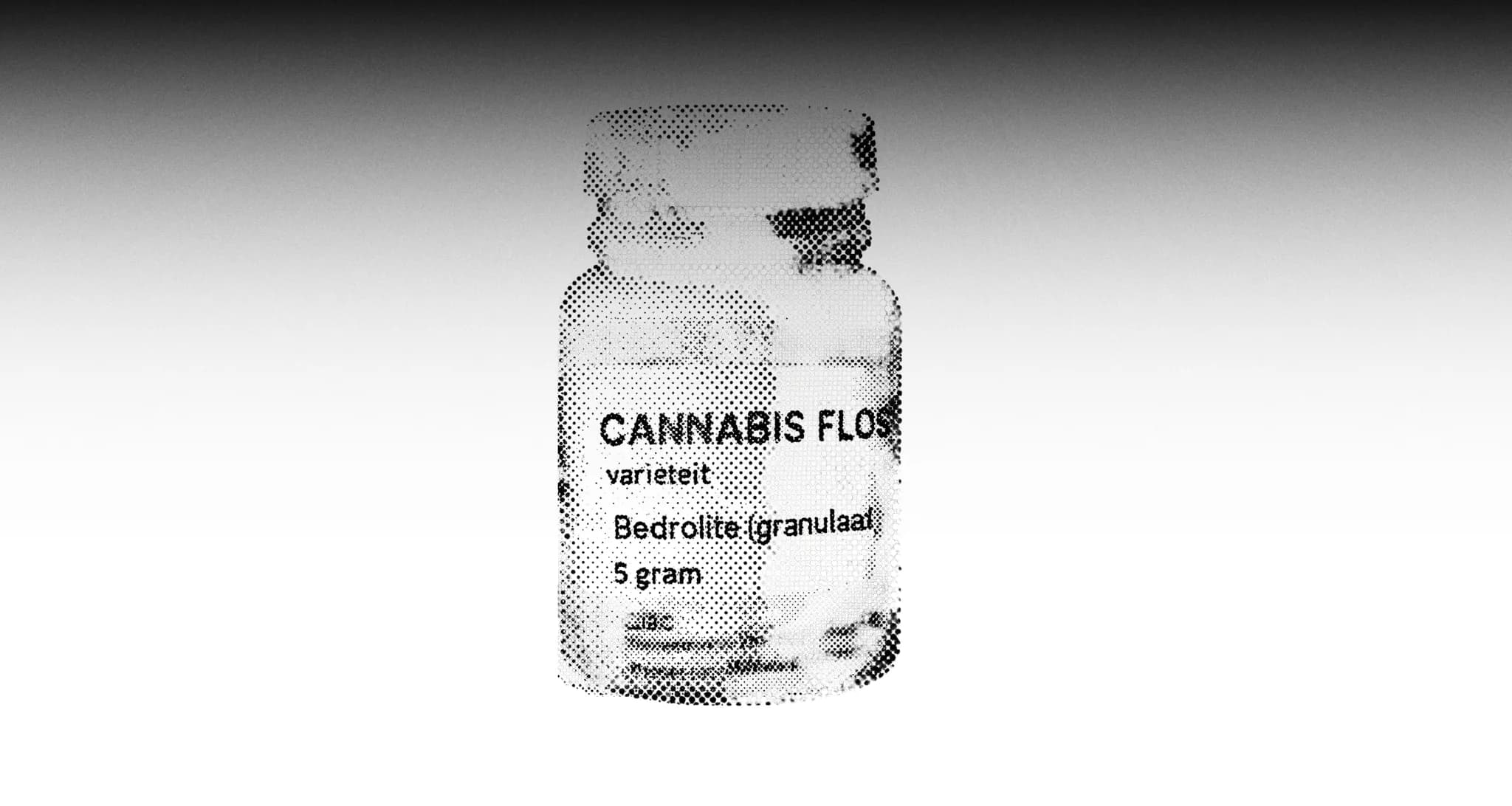
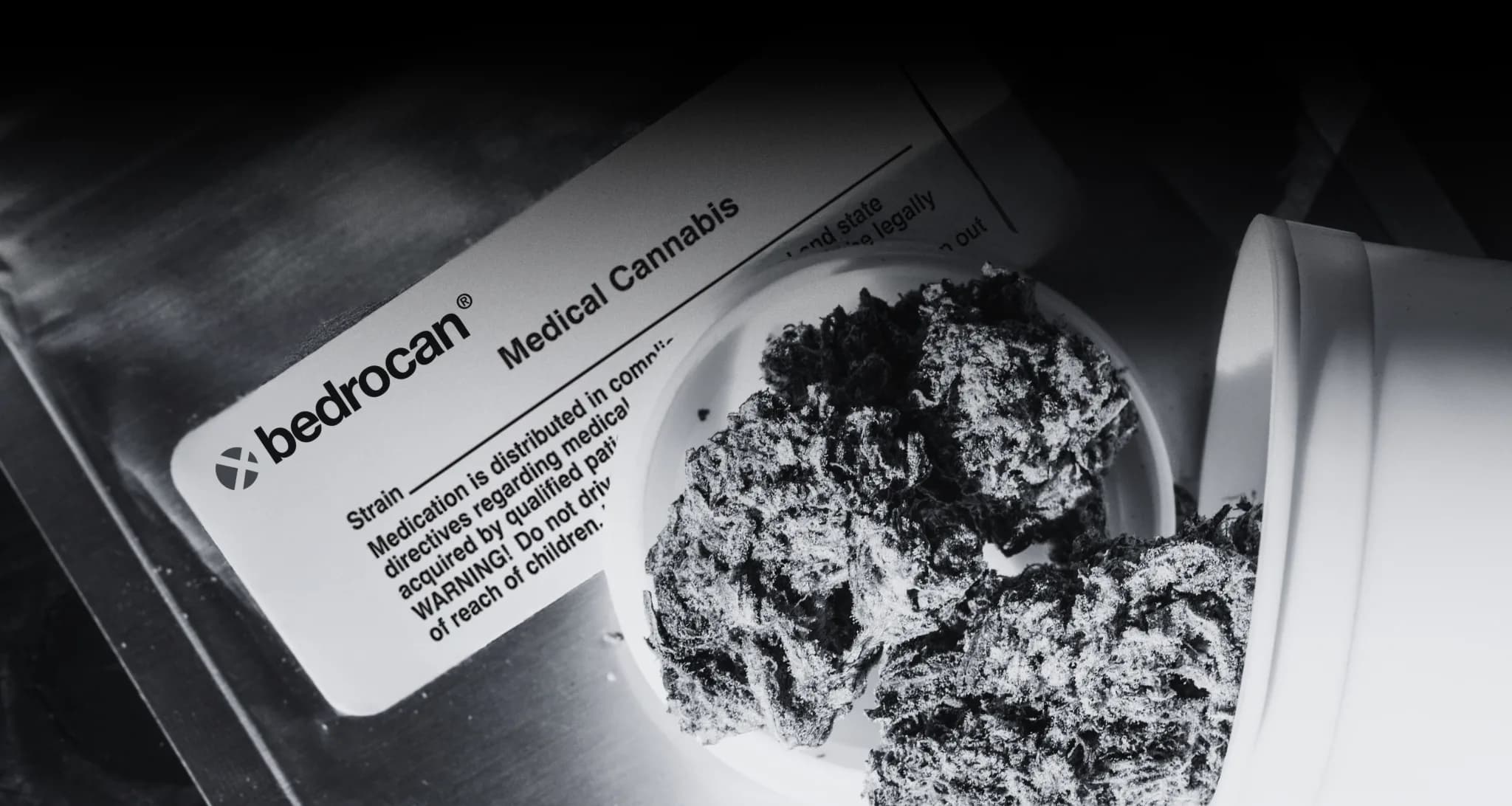
The trustees also set out the physical stock position. They have identified 340kg of finished Regime 1 product, 390kg of Regime 1 cultivation in progress, and 250kg of Regime 2 product. Regime 1 covers the standardised varieties supplied under the Dutch Office of Medicinal Cannabis (OCM) framework. Regime 2 covers raw material used in extracts and intermediate products such as Bedrolite.
The Canadian arrangement
Bedrocan’s Canadian shares and intellectual property have been sold to Becanex for €200,000, a price Erkelens himself described as ‘a bargain’. Becanex, a Dutch-based cannabis company, is a separate entity from the Erkelens family.
Becanex now holds the Canadian shares and IP, and Erkelens’ sons will run the cultivation side of the Canadian facility, which is no longer owned by the Bedrocan group, but rented from Becanex.
While the facility is not currently producing any product, once it is up and running, Becanex is expected to take on the extraction side of the operation. Crucially, Erkelens tells Business of Cannabis that the Canadian facility could produce Bedrolite, raising the prospect that one of Bedrocan’s most clinically sensitive products could eventually come from Canada rather than the Netherlands.
Red flags from the Dutch government
The Dutch Minister of Health, Welfare and Sport, Sophie Hermans, answered written questions from six parliamentary groups in a letter to the Tweede Kamer on November 06, setting out the state’s position on supply continuity to foreign markets.
“An investigation is currently underway to determine whether it is possible to continue supplying the United Kingdom with Bedrolite for a slightly longer period,” the Minister wrote. “This would give the country more time to transition to a medicine based on another cannabis variety.”
For families and clinicians currently reliant on Bedrolite for the treatment of rare and severe forms of epilepsy, this statement will be both frustrating and alarming.
As we’ve reported consistently in our coverage of this situation, changing to ‘another cannabis variety’ is simply not an option for patients, around seven of whom are thought to currently rely on Bedrolite.
As Matt Hughes of the Medcan Family Foundation told Business of Cannabis last month, potential supply gaps pose ‘an immediate risk to life for children and young people who rely on Bedrolite to control devastating, drug-resistant seizures.’
“These are children for whom every other medication has failed. Children who, without this treatment, would now be in palliative care or no longer with us at all.”
Indeed, as Ekerlens points out, ‘transition to another variety’ is the central clinical problem facing these patients.
Herman’s statement also claimed that ‘at present no consequences are expected for the availability of medical cannabis for patients’ before acknowledging in the same letter that no surplus stock of Bedrolite is available, following a harvest failure of more than 50%.
What does this mean for current stockpiles?
According to Herman’s letter, Bedrobinol, Bedrocan’s high-THC variety, will be depleted in early Q2 2027. Bedrolite, the CBD-dominant variety from which the Bedrolite oil is manufactured, will be depleted in early Q3 2027.
A tender to appoint Bedrocan’s replacement supplier is scheduled for publication in December 2026, with the contract awarded in May 2027 and supply expected to begin in September 2027.
The gap between stock depletion and new supply, on the minister’s own timeline, is at least two months for Bedrolite and at least five months for Bedrobinol. For patients, that means a supply interruption is now expected rather than feared, unless the restart of Bedrocan Nederland produces usable stock in the intervening window or stocks held elsewhere in the supply chain can bridge it.
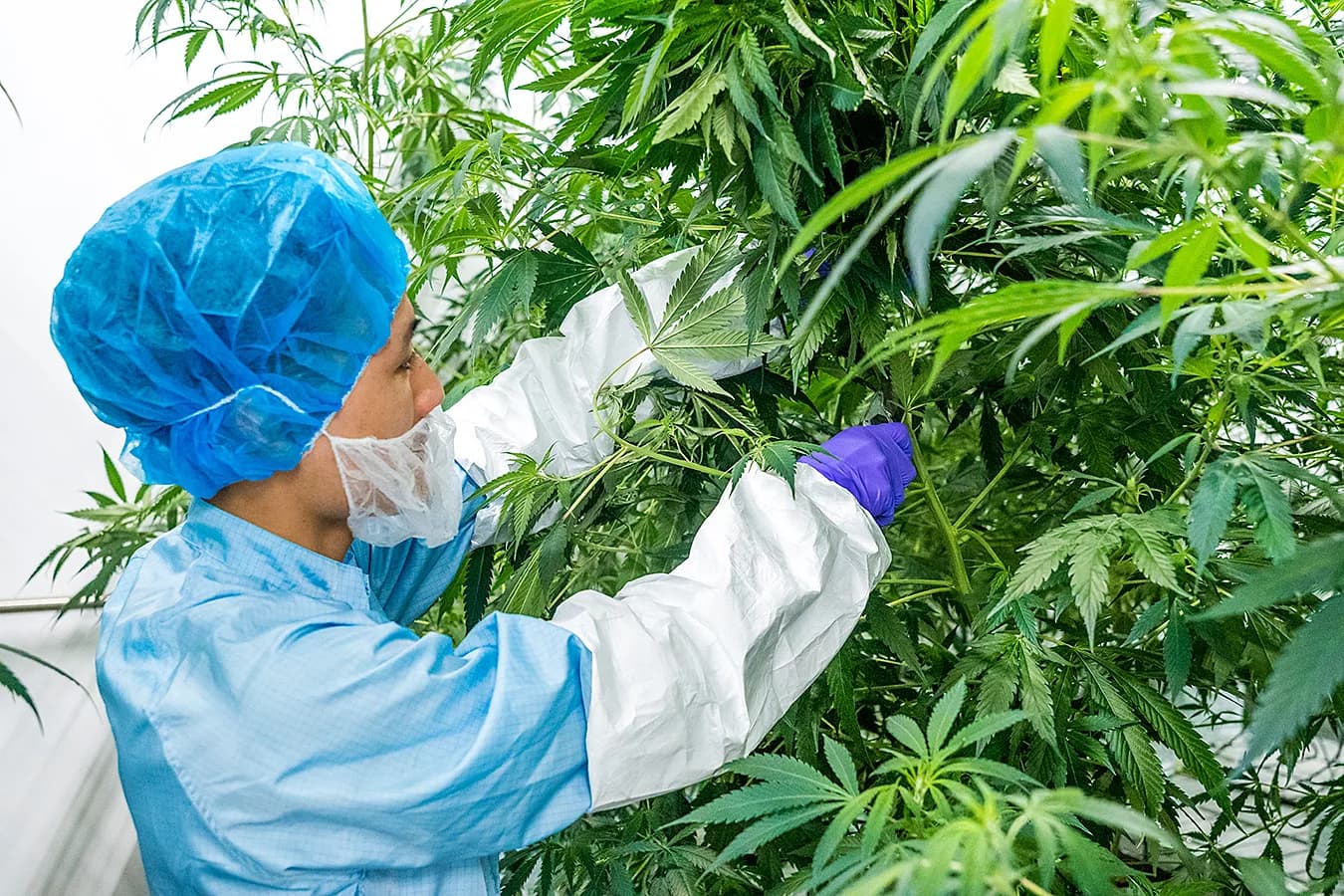
Erkelens told Business of Cannabis that a successful restart of either or both of its Dutch facilities in Veendam and Emmeloord, under new ownership and with a reinstated workforce, could in principle resume cultivation within weeks of approval. He cautioned that the first harvestable product would still take months.
The minister also confirmed that the Dutch state has moved away from the previously planned deadline of July 01, 2028, for the amended Opium Act to take effect. A new target date has not been set.
With the minister’s response offering little in the way of reassurance for patients and their families, the next critical date will be November 26, when the Tweede Kamer is set to debate Bedrocan’s collapse and the minister’s statement.
Business of Cannabis first approached the Dutch Ministry of Health, Welfare and Sport on October 13 with written questions on the UK supply position and the clinical basis for the ‘transition to another variety’ assumption.
In response, received shortly before publication, the Ministry provided a copy of the Minister’s November 06 letter to the Tweede Kamer but did not address the specific questions put to it.