


This is the first in a three-part series examining the various, conflicting accounts of Bedrocan’s bankruptcy declaration. Founder and former chairman Tjalling Erkelens account, and the initial findings of its administrators, are covered in Part 2 and Part 3.
On November 26, the Dutch House of Representatives (Tweede Kamer) will hold a debate on the recent collapse of Bedrocan Netherland B.V., in what is already an anxiously anticipated event for patients reliant on its products now facing supply disruption.
Bedrocan, for two decades, has held a unique position as the only domestic producer of medical cannabis in the Netherlands, while being so closely intertwined by the state itself through its supply contract with the Bureau voor Medicinale Cannabis (BMC).
Following the collapse of Bedrocan’s Dutch operations into bankruptcy last month, several conflicting accounts of its downfall have surfaced, and each will be examined in detail during the debate.
As the pioneering medical cannabis company fights for its survival, the conclusions of this debate will be crucial. Hundreds of patients across the world use Bedrocan’s products, but those with severe forms of epilepsy quite literally depend on them to live. For the investment Bedrocan needs to restart its production, a clear picture of what went wrong and who was ultimately responsible is vital.
The debate will test the Minister of Health, Welfare and Sport, Sophie Hermans, on her November 06 letter to the House, in which she characterises the bankruptcy as a ‘regrettable development’ and a matter of regular entrepreneurial risk. It will revisit the delay to the long-planned amendment to the Opium Act, now postponed beyond its mid-2028 target with no new date set.
It will consider the arrangements for continued supply to the Netherlands and to its export destinations, the United Kingdom among them. And it will examine the Dutch state’s duty of care to patients in the gap between Bedrocan’s depleted stocks and new domestic or imported supply.
It will do so in a political environment in which the minister’s position is itself under pressure. The handling of the Bedrocan file has become one of the most sensitive questions in the Dutch health brief, and her November 06 letter did little to quell concerns.
Three accounts of what caused Bedrocan’s bankruptcy are now on the public record ahead of the debate. They largely agree on the facts, the dates and the numbers. They diverge sharply on what those facts mean and on where responsibility lies.
The Minister’s account
Hermans submitted her response to the Standing Committee’s written consultation on November 06, forming the initial part of the ministry’s response to parliamentary questions on the collapse.
The letter characterises the bankruptcy, twice, as a ‘regrettable development’, describing Bedrocan as a company with ‘a long track record’ with which BMC had maintained a business relationship for many years.
What caused the bankruptcy
The minister attributes the collapse to a commercial sequence at Bedrocan, exonerating the state of any responsibility.
The service agreement between the State and Bedrocan had been terminated on January 01, 2026, she writes, and Bedrocan’s subsequent financial difficulties were ‘therefore not the result of the termination of the service agreement by the State’.
The letter does not identify an underlying cause further back, and does not reference the 2022-2023 BMC orders totalling 3,890 kg across 69 batches, the ‘2023 freezer incident’ at Bedrocan’s Emmeloord facility, or the November 2025 settlement agreement (VSO) between the State and Bedrocan that both the trustees and Erkelens cite as the governing framework for 2026.
Financial conduct
During the suspension of payments, the Minister writes, the administrator asked whether the State could contribute to Bedrocan’s financial position, ‘for example by paying invoices before the required quality inspections had been completed, carrying the attendant risk that the delivered medicinal cannabis might prove unusable after inspection’.
The Landsadvocaat, the state’s own attorney, advised against it. “The Cabinet decided not to cooperate with this request,” Hermans continued. “The risk was that payment would be made for unusable medicinal cannabis. Moreover, even with earlier payment by the State, there was insufficient certainty that a restructuring/restart would succeed.”
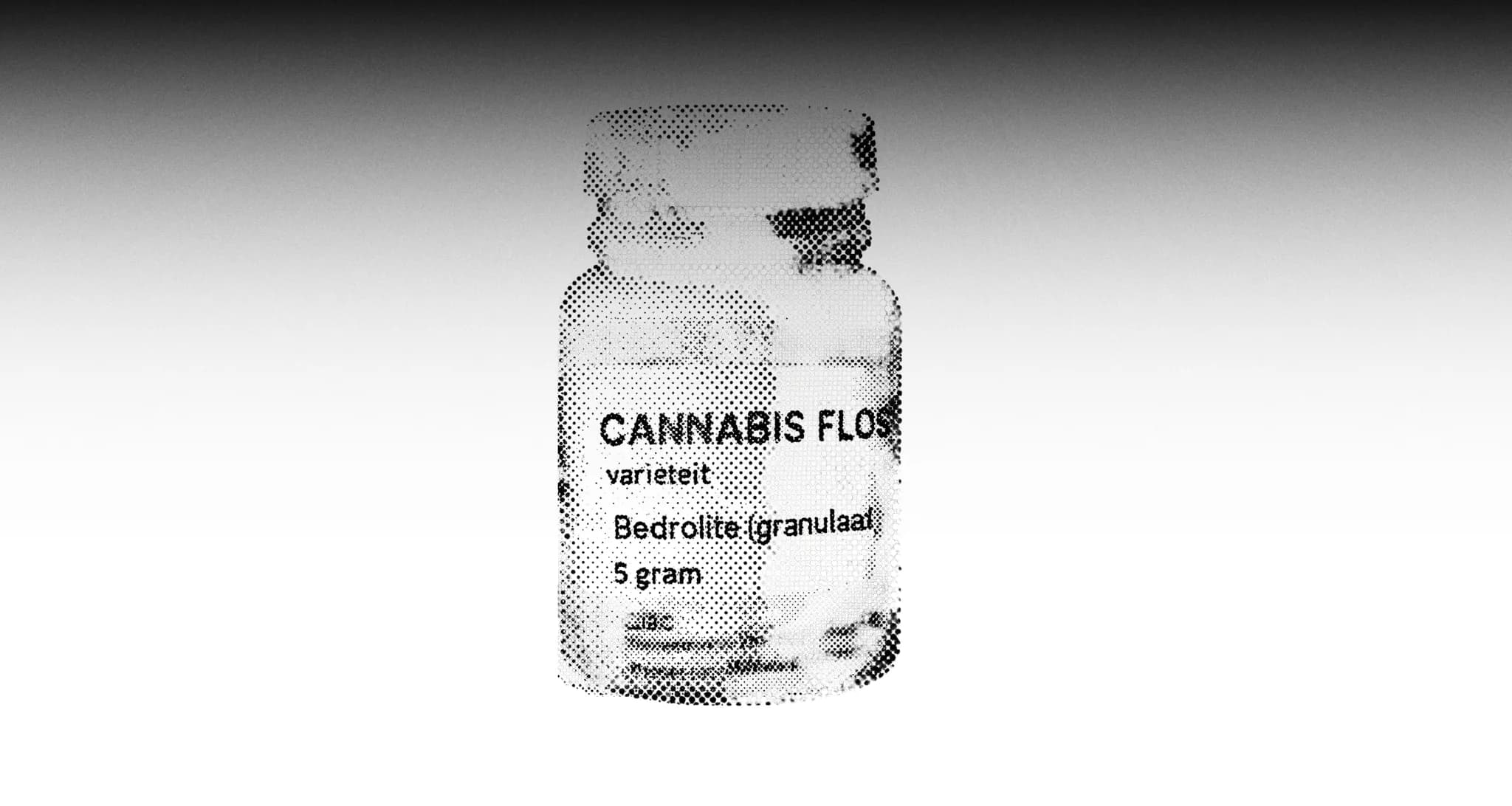
After the bankruptcy was declared the State chose not to take over the remaining inventory on the grounds that ‘the State already possesses sufficient stocks of the Bedrocan variety to meet domestic demand’. It cooperated in the resale of part of the inventory to a foreign party and, in the course of that cooperation, secured for itself a batch of Bedrolite from the Bedrocan estate that the trustee had initially been unwilling to release.
Future supply and patient impact
She tells the House that ‘at present, no consequences are expected for the availability of medicinal cannabis for patients’. This has been strongly contested by patients and their representatives and is seemingly contradicted in the next paragraph, which concedes that ‘it is likely that patients will at some point have to switch to another specific cannabis product’.
The BMC, she writes, has built up a stockpile that will cover the gap until a new supplier can be contracted, with the final delivery of Bedrocan, Bediol and Bedica varieties forecast for mid-Q3 2027, Bedrolite for early Q3 2027 and Bedrobinol for early Q2 2027.
On the United Kingdom specifically, the minister suggests: “An investigation is currently underway to determine whether it is possible to continue supplying the United Kingdom with Bedrolite for a slightly longer period. This would give the country more time to transition to a medicine based on another cannabis variety.”
Despite suggesting above that patients are expected to transition to alternative varieties, she notes that Bedrolite ‘is used, among other things, for the production of medicinal cannabis oil for children with epilepsy in whom other medicines have proved ineffective’.
What comes next?
A European tender is scheduled for publication in December 2026, with the selection of a new supplier in May 2027 and supply to begin ‘as soon as possible thereafter’. The planned amendment to the Opium Act, which was to open the Dutch market to multiple licensed producers and end the BMC monopoly, ‘will not enter into force on 1 July 2028 as previously envisaged’.
The timetable is ‘facing further delay’, and the Cabinet ‘considers it irresponsible to specify a new date at this point’. The minister commits to updating the House in spring 2027 on the state of both the tender and the bill.