

Last week’s US midterm elections have transformed the political map of the country, handing both the House and the Senate over to the Democrats.
Now that the dust has settled, the implications of what this historic shift in state and federal power means for US citizens have been thrust into the spotlight.
With dozens of new lawmakers set to be sworn into office in January, ongoing state-level cannabis policy battles across the country will no doubt be reshaped and rebalanced.
At the federal level, cannabis rescheduling remains partially complete, while a federal ban on intoxicating hemp products is just weeks away from coming into force.
While historically a Democratic wave would have been seen as a positive result for the cannabis industry, 2026’s rescheduling progress was the result of top-down directives from the Trump administration.
What has changed federally for cannabis?
Despite the sweep, little has shifted about the arithmetic needed to pass broad federal cannabis legislation. Anthony Coniglio, CEO of cannabis real estate investment trust NewLake Capital Partners, said the political change creates a theoretical opening but will not by itself move legislation that has repeatedly stalled.
“Cannabis banking reform has had bipartisan support for years, yet under majorities of both parties Congress has been unable to get it done,” Coniglio said.
“The House passed the SAFE Banking Act seven times, and the Senate Banking Committee approved it in 2023, but it has never received a vote on the Senate floor. A change in leadership doesn’t by itself change that record.”
He added that the composition of the incoming Senate matters more than the headline majority. “Key committee gavels are expected to move to members who have supported cannabis reform, and the new Senate should include more senators who support reform than the outgoing class. That improves the odds, but it doesn’t guarantee an outcome.”
Chief among them is the return of Ohio Senator Sherrod Brown, who chaired Senate Banking under the last Democratic majority and was the SAFE Banking Act’s most consistent champion.
However, according to Adam Rosenberg, Chair of the Board of the National Cannabis Industry Association (NCIA), the new congressional balance still represents an opportunity for federal change.
“America’s legal cannabis industry generates more than $29bn in annual sales and supports more than 400,000 jobs, yet federal policy continues to impose unnecessary barriers on businesses operating in state-regulated markets,” Rosenberg explained. “The new congressional leadership has an opportunity to build bipartisan support for legislation that improves access to banking and capital, resolves unfair federal tax treatment and establishes a durable regulatory framework that respects state markets.”
President Trump’s stance on cannabis has been characteristically inconsistent. His recent push for rescheduling is widely accepted to have been the result of concerted lobbying efforts, while his promotion of CBD products and push to have them included in certain Medicare schemes were similarly understood to be thanks to personal ties with industry leaders.
Senator-elect James Talarico (D-TX), behind one of the most significant Senate flips of the night, told Fox News when asked where he could cooperate with Trump: “I agree with the president on the need to legalise marijuana and reform this broken criminal justice system.”
Elsewhere, long-time Trump ally and GOP operative Roger Stone told Marijuana Moment last week that he would urge the President to sign cannabis legislation sent to him by Democrats.
How do the midterms impact rescheduling?
Attorney General Todd Blanche’s April 23, 2026, order moved state-licensed medical cannabis to Schedule III, delivering what the industry considers the single most commercially consequential federal reform in a decade, without requiring a single vote from Congress.
While the industry anxiously waits for clarification on whether adult-use cannabis will also be extended to Schedule III, Newlake’s Coniglio believes the process remains largely independent of the midterm results.
“State-licensed medical cannabis has already moved to Schedule III, and we remain confident the broader rescheduling proceeding will reach the same result. The timing is uncertain, and that process will continue independently of the election results,” he explained.
“We are not making investment decisions based on what we think Washington might do. We remain focused on the underlying real estate, the strength of our tenants, and the cash flow those properties generate.”
Not every industry voice is satisfied with that model. Morgan Fox, political director of the National Organization for the Reform of Marijuana Laws (NORML), accused Republican leadership of ignoring public sentiment to let reform legislation languish and called on Democrats to supply ‘the necessary leadership and bipartisanship’ in the 120th Congress.
“The fate of federal marijuana policy should not be left in the hands of bureaucrats and judges,” Fox said.
The real changes are at the state level
The Democratic sweep handed the party full control of governorship and both legislative chambers in Pennsylvania and Wisconsin, along with governor’s flips in Texas, Ohio, Georgia and Iowa, and Senate flips in all four plus North Carolina, South Carolina, Kansas, Maine and Michigan.
These local policy battles are likely to be where the real impact of last week’s election is felt.
Pennsylvania

Pennsylvania is the clearest near-term legalisation prospect. Governor Josh Shapiro, who has championed adult-use legalisation, now enjoys a Democratic trifecta after the state Senate flipped, with Shapiro predicting a 26-24 Democratic majority in the chamber at the time of writing.
The House, which passed a legalisation bill in May 2025 only for it to stall in the then-Republican Senate, remains in Democratic hands. Senate Bill 120, authored by Senator Sharif Street (D), is already in the chamber, and the Pennsylvania Independent Fiscal Office has projected nearly US$500m in annual revenue under the governor’s plan. The state’s existing medical market is already worth US$1.8bn a year.
An April 2026 Susquehanna Polling & Research survey of 705 likely Pennsylvania voters, commissioned by the Pennsylvania Cannabis Coalition, found 69% voter support for regulating and taxing adult-use cannabis, including 67% of Republicans, per reporting by Keystone Newsroom.
Meredith Buettner Schneider, Executive Director of the Pennsylvania Cannabis Coalition (PCC), said: “With Democrats now controlling both chambers of the legislature and the Governor’s office, they must heed the call of Pennsylvanians, who, poll after poll, have made clear they want legal, regulated adult-use cannabis.
“It’s well past time for legislative leaders and the governor to come to an agreement on a market structure that creates opportunities for small businesses, provides meaningful pathways for social equity applicants to participate, builds on Pennsylvania’s existing cannabis industry, and brings back the jobs and revenue that we’re losing to neighbouring states that have already legalised. With unified control of state government, there is no reason to delay legalisation any longer.”
Wisconsin, Iowa and the new legalisation belt
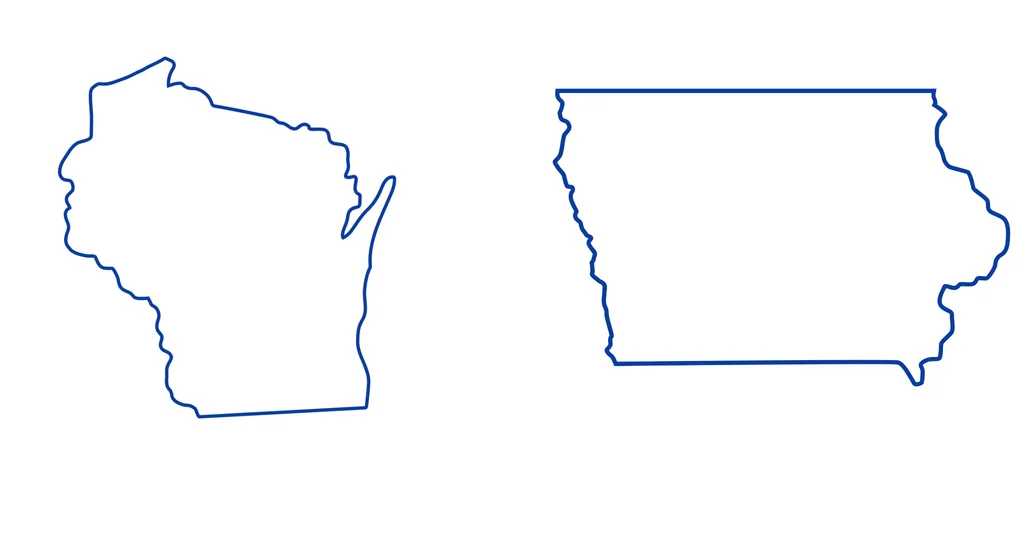
Wisconsin, currently one of only a handful of US states permitting neither medical nor recreational cannabis, is likely to follow. Governor-elect David Crowley (D) and a newly Democratic legislature are expected to move on legalisation.
Crowley has estimated a US$80m to US170m in annual revenue, earmarked for healthcare. Representative Mark Pocan (D-WI) has suggested Wisconsin could legalise as soon as next year.
Iowa is cueing up on a similar trajectory. Senator-elect Josh Turek (D) called for legalisation and taxation of cannabis sales during his campaign, and Governor-elect Rob Sand (D) has proposed legalising, taxing and regulating adult-use cannabis.
Texas

Texas delivered the most unexpected reset. Lieutenant Governor Dan Patrick, the architect of the state’s crackdown on intoxicating hemp products, lost his seat to State Representative Vikki Goodwin (D), who has told Cultivated Daily she would regulate THC like alcohol.
Incoming Attorney General Nathan Johnson (D) has previously introduced legislation to decriminalise cannabis and regulate hemp-derived THC. Governor-elect Gina Hinojosa (D) replaces Governor Greg Abbott.
Houston delivered its own cannabis-reform signal. Proposition A, a city ballot measure making enforcement of Class A and B marijuana possession misdemeanours the Houston Police Department’s lowest priority and banning no-knock warrants, passed with over 70% approval. Catina Voellinger, Executive Director of Ground Game Texas, which backed the measure, said the result showed Texas’s political future was open to change.
Comprehensive cannabis reform in Texas remains a stretch given the Republican state legislature. But the intoxicating hemp bans Patrick and defeated Senate candidate Paxton championed, along with the Texas Department of State Health Services (DSHS) regulations enacted under them, may not survive the transition.
The hemp industry has already begun pushing for action. David K. Sergi, General Counsel of the American Healthy Alternatives Association (AHAA), has published an open letter to outgoing Governor Greg Abbott calling on him to direct DSHS to reverse its anti-hemp regulations in his lame-duck window.
“I realise you lost today, but one good thing you did was to veto Lt Governor Dan Patrick’s hemp bill,” Sergi wrote. “Ultimately, he is responsible in a great part for your loss, even though you did your part for hemp. Dan Patrick challenged the hemp industry, and it roared louder than any you have ever heard.”
The AHAA has an active lawsuit pending in Travis County Court against DSHS and Interim Commissioner Imelda Garcia, filed on behalf of eight named Texas hemp operators.
Massachusetts
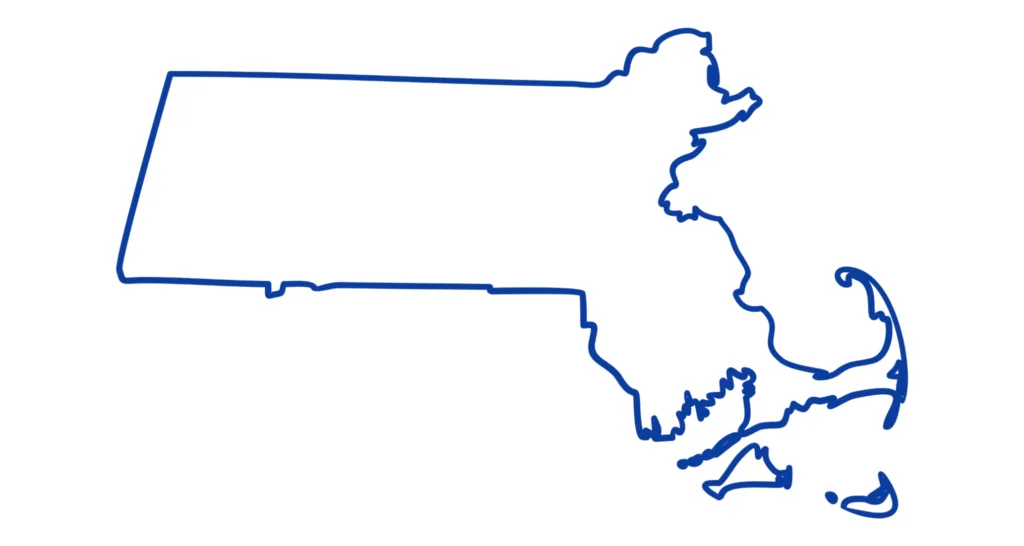
Question 8 would have repealed Massachusetts’ regulated adult-use cannabis retail market, which voters originally approved in 2016 under Question 4 and which has operated since 2018.
The repeal campaign, run by the Coalition for a Healthy Massachusetts, was funded largely by SAM Action, the political arm of Smart Approaches to Marijuana.The measure was voted down by a roughly 52-point margin, a wider rejection than the 53.7% by which the original legalisation measure had passed a decade earlier.
Massachusetts’ adult-use market now generates around US$1.5bn in annual sales and passed US$10bn in cumulative gross sales in September 2026. Cannabis-related taxes brought in roughly US$336m in fiscal 2026, and the sector employs around 15,000 people.
Opposition to Question 8 stretched across most of the state’s political establishment, including Governor Maura Healey, Senators Elizabeth Warren and Ed Markey, Representative Ayanna Pressley, more than 50 state lawmakers, the Marijuana Policy Project, and the state Cannabis Control Commission.
SAM Action spent US$3.7m on the campaign and delivered just 24% of the vote for the Yes side.
Paul Armentano, Deputy Director of NORML, said: “In fact, more Massachusetts voters support legalisation today than did a decade ago, and these election results prove it.”
David Bodurtha, Commercial General Manager of RISE Dispensaries Massachusetts, the Green Thumb Industries-owned retail brand, said the result vindicated a decade of legal adult-use operations in the state.
“Massachusetts voters have reaffirmed what 10 years of a functioning legal market have demonstrated: regulated cannabis delivers real benefits for the Commonwealth,” Bodurtha said.
“Rejecting Question 8 ensures patients and adult-use customers can continue accessing tested products through licensed dispensaries, preserves jobs, supports local businesses, and protects critical tax revenue.”