
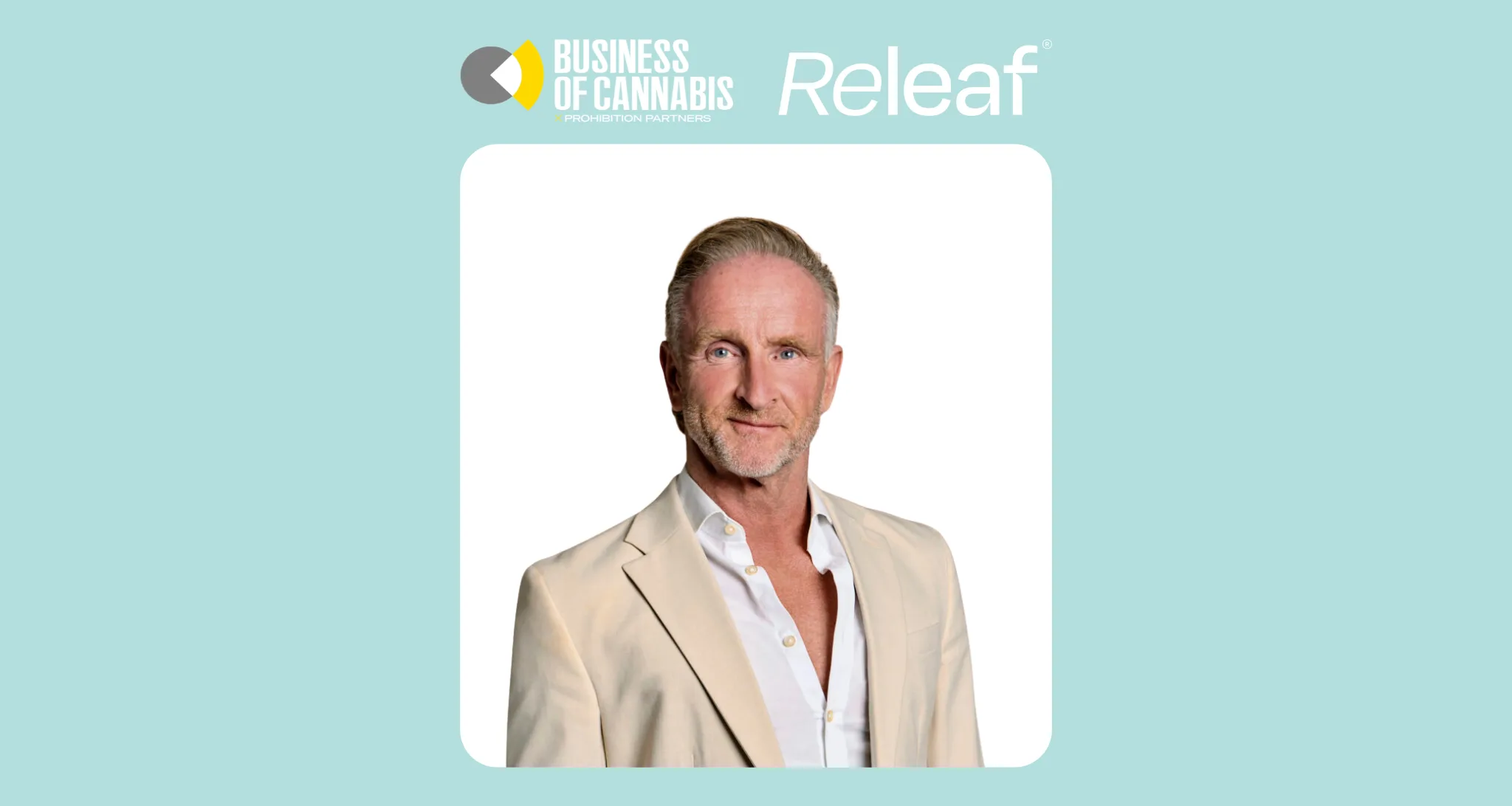
In the first of a new three-part series, Graham Woodward, Chief Medical Officer at Releaf, sat down with Business of Cannabis to discuss what it takes to scale a medical cannabis clinic from three patients to tens of thousands in just two years.
Releaf, now the fastest-growing medical cannabis clinic in the UK, is also one of the newest, having opened its doors to patients in early 2024.
When Graham Woodward was brought in as Releaf’s chief operating officer that same year, it had just three patients. Just over two years later, he is the clinic’s chief medical officer, and Releaf has tens of thousands of patients on its books.
This breakneck expansion, Woodward explained, has relied on ensuring the clinical foundations were set in concrete from day one.
“You don’t build a successful healthcare business and then introduce clinical governance,” he told Business of Cannabis. “You establish excellent clinical governance first and build the business around it.”
The UK is now, according to the latest figures from Prohibition Partners, among Europe’s largest and fastest-growing medical cannabis markets. Over the last eight years of steady, consistent growth, the number and size of clinics have grown in tandem to meet demand. Whether governance has kept pace with patient demand has been a recurring point of tension in the sector, including inside the Care Quality Commission (CQC) itself.
This is in no small part because of how the industry is structured. With the NHS remaining reluctant to expand access beyond a handful of patients with drug-resistant epilepsy, the overwhelming majority of the market is private and self-paid. Medical cannabis clinics, critics argue, are therefore run like any other business.
Woodward challenged this framing, giving his company’s day-to-day practice as a key example. “What outsiders often fail to appreciate is that healthcare cannot simply be scaled in the same way as a conventional commercial business,” he says. “Every additional patient represents an individual clinical responsibility, not simply another customer.”
Releaf’s consultants, he explained, retain clinical responsibility for the patients they initiate onto treatment, and patients with complex clinical needs stay under consultant-led care. The clinic runs multiple multidisciplinary team meetings every day, carries out regular prescribing audits, and reviews recorded clinical consultations as part of its quality assurance programme.
“We use internationally recognised assessment tools to better understand treatment outcomes and the impact our services have on patients’ quality of life. We are not simply interested in how many patients receive treatment. We want to understand whether that treatment is genuinely making a difference.”
This ethos, which now forms the foundations on which Releaf has been built, was forged in a diverse, distinguished and decades-long career.
By the time he had entered the cannabis space, Woodward had already spent some 30 years in the healthcare sector, primarily focused on mental health.
“I’ve received the Royal Free Achievement Award for supporting patients in the community and the Reckitt Benckiser Award, during my first year working as a medical science liaison, and I was the first nurse to receive CQC registration to establish one of England’s earliest medical cannabis clinics,” he explained.
“I also had the privilege of becoming the first nurse specialising in medical cannabis care to join the CQC as a Specialist Advisor, something I’m particularly proud of.”
Neither Woodward’s professional achievements nor Releaf’s rapid evolution from newcomer to one of the market’s leading clinics would have been possible, Woodward continued, without the right people.
“These achievements have all meant a great deal to me, but when I reflect on my career, what stands out most isn’t an award or a professional milestone. It’s the people who believed in me and the opportunities they gave me,” he said candidly.
“Early in my career, I was fortunate to have some exceptional people around me who recognised my potential, encouraged me and gave me the confidence to become the best I could be. That experience has stayed with me throughout my professional life and shaped the way I lead others.”
One of the most important lessons learned throughout his career, he adds, is that ‘outstanding healthcare’ requires ‘strong leadership, clear values, clinical accountability and, above all, people who genuinely care.’
“I’ve always believed that when you trust people, give them responsibility and create an environment where they can flourish, extraordinary things can happen.”
He credits Releaf’s founders with doing exactly that for him. When he joined in 2024, he says, they gave him the autonomy to build the healthcare service he wanted to build.
“The founders placed an enormous amount of trust and belief in me, giving me the freedom and autonomy to develop the very best healthcare service I could, without unnecessary interference or compromise on clinical standards. For me, that opportunity has been the greatest professional reward of my career.”
Now, in turn, Woodward is working to instil that same attitude throughout the business.
“I had made a commitment to the founders, our patients and the people joining our organisation, and I was determined to deliver on that promise.
“‘Build it and they will come.’ I’ve always preferred my own version. Build it, and they will come. Make it safe, caring and effective, and they will stay.”