


Is cannabis legal in Thailand in 2026?
Cannabis is decriminalised in Thailand but no longer freely sold.
On June 26, 2025, a ministerial notification significantly restricted access to cannabis flower, in theory requiring a prescription to obtain it. In practice, this effort to transition the thriving cannabis industry into a purely medical one has taken the majority of 2026 to build out an enforcement framework.
Enforcement has intensified sharply through 2026, with repeat offenders now facing immediate licence revocation.
The Cabinet approved a draft Cannabis and Hemp Control bill on September 22, 2026, that would turn the ministerial framework into primary legislation and require remaining dispensaries to convert into medical facilities.
What happened in 2022 and why did Thailand remove cannabis from its narcotics list?
Thailand’s 2022 decriminalisation was driven by the Bhumjaithai Party, which had made cannabis policy a signature issue. The Narcotics Control Board approved the removal of cannabis and hemp from the Category 5 narcotics list in January 2022, and the delisting took formal effect on June 09, 2022. Thailand became the first country in Asia to decriminalise the plant.
The vacuum was the problem. Although medical and research use had been permitted under a 2019 Narcotic Act amendment, the June 2022 delisting arrived without a controlling cannabis statute to regulate what the market could and could not do.
A ministerial notification issued the day before delisting set modest ground rules with flower declared a controlled herb, while extracts above 0.2% THC remained scheduled. Recreational sale, advertising and consumption remained largely unregulated.
The resulting grey market expanded rapidly. More than 18,000 cannabis shops opened across Thailand in the following two years, concentrated in Bangkok, Phuket, Chiang Mai, Chon Buri and Surat Thani. Imports, exports, retail and cultivation all proceeded faster than the regulatory framework could keep pace with.
As Prohibition Partners’ chief executive, Stephen Murphy, noted in October 2026, Thailand had ‘in effect, conducted the region’s experiment in real time.’
How did the dispensary market boom and then retreat?
Thailand’s dispensary sector grew rapidly after the 2022 delisting and peaked at 18,517 licensed outlets, per Ministry of Public Health (MoPH) data, before beginning its current retreat.
The first and sharpest drop came through licence non-renewal. In 2025, 8,636 three-year shop licences came up for renewal. According to Public Health Ministry data reported by Nation Thailand only 1,339 shop owners (15.5%) applied to renew, while the other 7,297 chose to close.
The retreat continued through 2026. By April the MoPH register showed 11,386 shops in operation. By September, a separate live dashboard maintained by the Department of Thai Traditional and Alternative Medicine (DTAM), the sector’s day-to-day regulator, showed around 9,700.
In November, government figures cited by Deputy Government Spokesperson Ploythalay Laksameesaengchan at a press briefing put the licensed outlet count at 12,279 nationwide.
The two registers (MoPH and DTAM) use different methodologies and cannot be directly reconciled, which is why the November government figure appears higher than the September dashboard reading.
The provincial distribution, per the November government briefing, concentrates most heavily in Bangkok (1,726 outlets), Phuket (1,046), Chon Buri (900), Surat Thani (717) and Chiang Mai (482). Those five provinces account for 4,871 outlets between them.
Where does the medical-only bill stand?
The regulatory tightening has run on two parallel tracks. The first is a cascade of ministerial measures that have narrowed the permissive 2022 framework without requiring primary legislation. The second is the draft Cannabis and Hemp Control bill, which would place the sector on statutory footing.
On June 26, 2025, days after the Bhumjaithai Party exited the governing coalition, the MoPH issued the Notification on Controlled Herbs (Cannabis) 2025, which required a doctor’s prescription for every sale of cannabis flower. Tilleke & Gibbins, Thailand’s largest law firm, described the notification in a September 2025 compliance note as marking the point where liberal cannabis access ended in Thailand.
Further ministerial instruments followed. Ministerial Regulation No. 2 B.E. 2569 was published in the Royal Gazette on April 30, 2026, setting licensing criteria for study, research, export, sale and processing of controlled herbs. A clinic-standard rule introduced in December 2025 required a certified traditional-medicine practitioner on the premises of any dispensary during all operating hours.
The bill itself cleared Cabinet on September 22, 2026. Public Health Minister Pattana Promphat told reporters the following day that the draft would confine cannabis use to medical settings under doctor supervision, with a doctor based on the premises of any dispensary wishing to operate as a medical facility. Pattana estimated that more than half of all shops would need to convert to medical facilities to renew their licences, which expire on staggered three-year cycles through 2026, 2027 and 2028. The draft has now been referred to the House of Representatives for consideration. At the time of writing, no parliamentary reading has been reported.
What does the November crackdown change for operators?
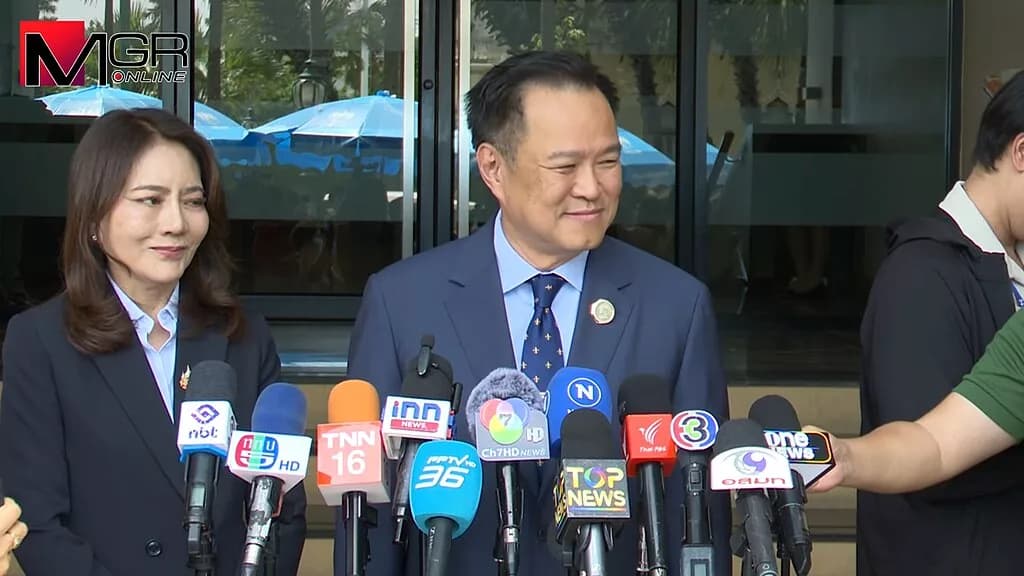
On November 07, 2026, the Thai government confirmed an escalation of enforcement, with repeat offenders now facing immediate licence revocation. The announcement came at a Government House press briefing from Deputy Government Spokesperson Ploythalay Laksameesaengchan, who told reporters that ‘proactive inspections had uncovered various violations, including selling cannabis without prescriptions,’ and that ‘the government does not support recreational cannabis use.’
The penalty framework underpinning the crackdown was issued by DTAM on June 22, 2026. It sets a graduated structure of 30-day suspensions, 90-day suspensions and outright revocation. Deputy Director-General Dr Thewan Thanirat said the guidelines were drawn up to standardise what enforcement officers and operators should expect in inspections.
A 30-day suspension can be imposed for incomplete business reports, failure to submit reports, selling or exporting flower below GACP standard, not displaying the licence clearly, failing to show an electronic licence to inspectors, or commercial advertising.
A 90-day suspension covers failure to report export details or selling cannabis without a prescription from a qualified practitioner. Outright revocation is on the table for filing false reports, selling without a prescription to anyone under 20, selling to pupils, students, or pregnant or breastfeeding women, allowing smoking on the premises, selling via vending machines, selling via online or electronic channels, and selling in temples, dormitories, or public parks.
Suspensions for multiple breaches are stacked but capped at 90 days total. A second breach of the same condition after a suspension triggers immediate revocation.
Of 66 appeals lodged in 2026 against licence suspensions or revocations, 31 came from Bangkok, 15 from Phuket, seven from Si Sa Ket, six from Surat Thani, two from Chon Buri and five from other provinces. Appeals are heard first by a sub-committee on Appeals Consideration and Rulings, then referred to the Committee for the Protection and Promotion of Thai Traditional Medicine Wisdom for a final decision.
Can Thailand actually run a medical market? The prescriber gap
The prescription requirement is binding only where qualified prescribers exist. Thailand’s register lists roughly 192,559 health professionals eligible to prescribe cannabis under the 2025 notification, drawn from seven recognised categories: medical doctors, Thai traditional medicine doctors, applied Thai traditional medicine doctors, folk healers, Chinese medicine practitioners, pharmacists and dentists. Only 3,693 had received the specific training to issue the PT 33 prescription form on which the controlled-herb system depends. That is 1.9% of the eligible pool.
PT 33 is a single-use paper form valid for up to 30 days of supply, with no refills. The prescriber names the strain or product, dosage and duration. Dispensaries must keep every PT 33 on file for at least a year and produce them on demand to DTAM or the police. Tilleke has reported that teleconsultation and online prescriptions are not covered by the notification and that policymakers view chat, social media and email prescriptions as non-compliant.
The gap between theoretical and practical prescribing capacity is at the heart of the current operational debate. Cenk Cetin, a cannabis industry operator in Thailand, told a Bangkok industry conference in September 2026 that ‘the next shop should know whether PT33 was used or what the last shop dispensed.’ At present, as Murphy pointed out at the same event, ‘it cannot.’ He added: “The demand for a medical market is real. The capacity to serve it is not yet in place.”
Consultation records from Cannabox clinic covering 379 patients show the most common indications for which Thais are seeking cannabis prescriptions are insomnia, anxiety, chronic pain and depression. One Bangkok cannabis retailer reported that its monthly flower sales halved between November 2025 and August 2026.
What does the re-restriction mean for foreign operators and Thai exporters?
Thailand’s cannabis producers have oriented themselves increasingly towards export. The DTAM register lists 282 GACP-accredited cultivation sources across 50 provinces, and total cannabis and hemp exports reached around 2.5bn baht (approximately €65m at prevailing exchange rates) across 31 countries, according to Dr Peeracha Kukasemkit, director of DTAM’s medical cannabis division, as cited in Thai health publication Hfocus in July 2026.
Australia is Thailand’s biggest cannabis export market. Imports of Thai medical flower into Australia rose nineteen-fold in a single year. The European Union is the second major target, though Thai producers reach it indirectly, with Germany, the Czech Republic, Switzerland and Portugal all key markets.
Compliance remains the constraint. There is no mutual recognition agreement between Thailand and the EU, and no Thai cannabis site is listed in EudraGMDP, the EU’s database of GMP certificates. Thai flower consequently reaches European patients through the GACP raw-material route, which is exempt from the Section 72a certificate that would otherwise require a German inspection of the growing site.
That route itself may be narrowing. Guidance issued by the German state of Hesse on June 08, 2026 may reclassify flower dried and trimmed abroad as a GMP product, which would require Thai producers to install GMP-grade drying and trimming at the farm. Dr Nickel Dittrich of Berlin-based consultancy GMPion wrote in a recent Business of Cannabis analysis that the guidance reframes the question for Thai exporters from one of capacity to one of EU compliance.
A separate enforcement signal has emerged in Europe. An analysis published by cannabidiol.ie on November 20, 2026, compiling Revenue Ireland press releases from 2023 to 2026, found that cannabis seized at Irish airports from flights originating in Thailand has risen from zero of 17 detections in 2023 to 10 of 16 detections in 2026 to date, or 73% of 2026 kg so far. The data captures Revenue Ireland’s enforcement focus as well as source country and cannot stand alone as a measure of informal export volume. However, it signals that Thai cannabis has begun to attract regulatory attention outside Thailand too.