


This article was originally published in February 2026, and was most recently updated on September 22, 2026.
Organigram has completed its acquisition of Germany’s Sanity Group, closing at €107.3m upfront with earnouts capped at €113.8m, slightly below the €250m headline figure struck at announcement in February.
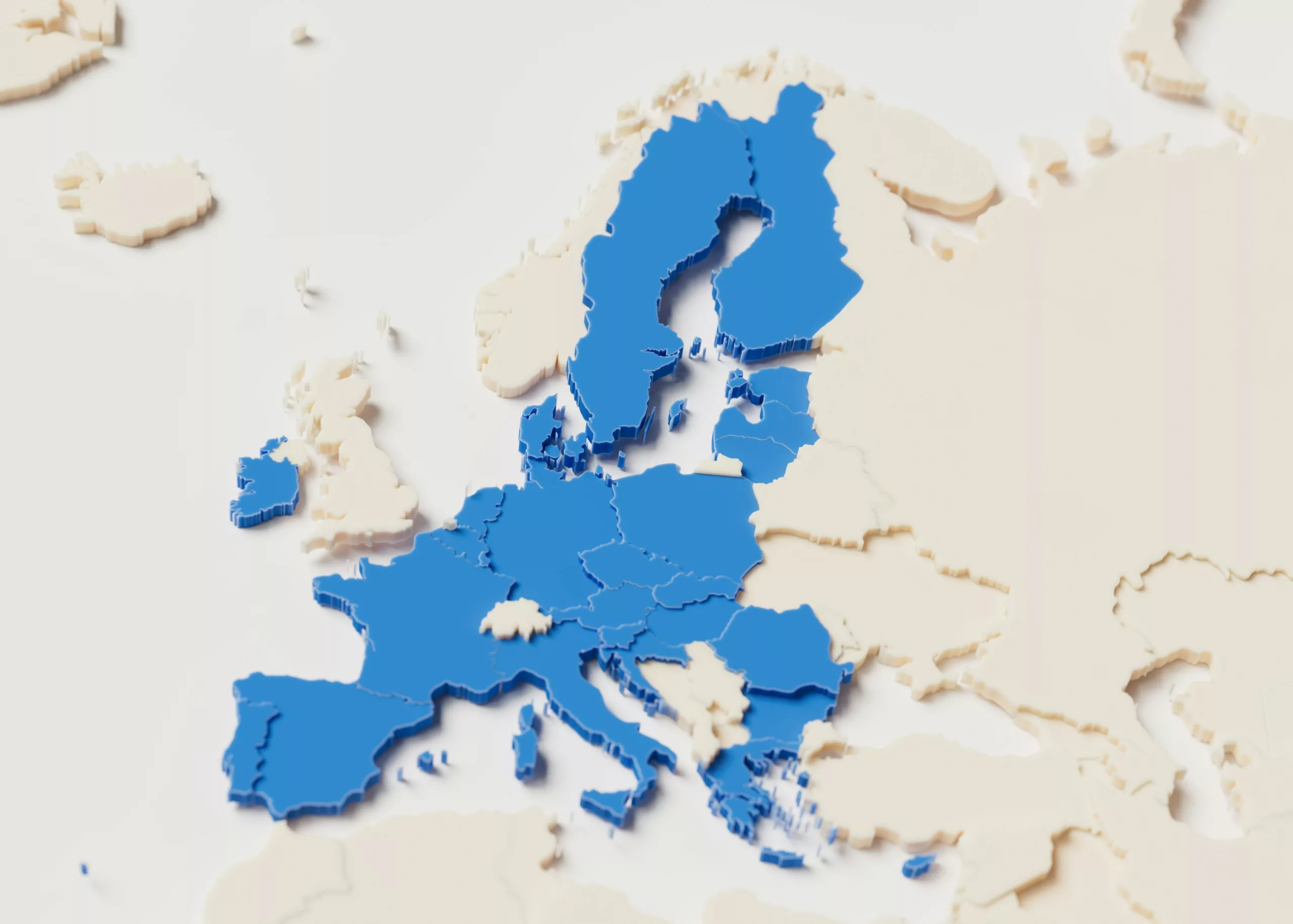
The deal marks the latest and most significant consolidation event in the booming German market, as North America’s largest cannabis operators accelerate their expansion in the European medical cannabis market.
It also marks the culmination of a business relationship which has gradually expanded in scope since its inception in 2022, when British American Tobacco (BAT) led Sanity’s €37.6m Series B fundraise, having already taken a near-20 percent stake in Organigram the previous year.
The tobacco giant’s fingerprints are visible throughout the proposed acquisition, and BAT opted to receive Organigram shares rather than cash for its stake in Sanity, while simultaneously injecting a further C$65.2m into Organigram to help fund the deal.
In February, James Yamanaka, the newly appointed CEO of Organigram, who took the role in January and previously served as Global Head of Strategy at BAT, said: “The proposed acquisition of Sanity Group marks a pivotal step in Organigram’s global expansion strategy as a leader in the rapidly expanding cannabis industry,” said
“This transformational acquisition will bring together two market leaders, extend our commercial footprint into Europe, and strengthen our competitive edge in the world’s largest federally legal cannabis markets.”
The deal (updated)
Under the terms finalised at completion, Organigram paid Sanity’s shareholders upfront consideration of €107.3m – €78.0m in cash and €29.3m in shares, including 3,146,195 common shares and 12,638,228 preferred shares issued to BAT. That came in below the €113.4m upfront figure struck at announcement in February.
A further earnout of up to €113.8m, predominantly in shares, remains tied to Sanity’s financial performance over the twelve months to April 1, 2027, unchanged from the terms announced in February. Earnout shares are priced on a volume-weighted average basis, with a floor of C$3.00 and a cap of C$4.00 per share. Combined, the deal’s total potential consideration now stands at up to €221.1m, down from the up to €250m struck at announcement.
The cash component was funded through a combination of restricted Jupiter fund cash, a C$60m senior secured credit facility with ATB Financial, and a C$65.2m BAT private placement. BAT, which holds stakes in both companies, received Organigram shares in lieu of cash for its interest in Sanity, effectively seeing it exit one investment and deepen another.
Organigram first invested in Sanity in June 2024, deploying €14m from its Jupiter strategic investment pool, which was itself created using proceeds from a C$124.6m BAT investment in November 2023, in exchange for a minority stake and an expanded flower supply agreement. This deal converted that foothold into full ownership.
To receive the full consideration, Sanity is required to hit net revenues of €143m and positive EBITDA of €20m over the twelve months to April 1, 2027. As a condition of any earnout being paid at all, Sanity must generate sufficient EBITDA to be self-sustaining on a cashflow basis.
Completion took place on April 14, 2026, after Organigram shareholders approved the deal at the company’s AGM on March 30, with TSX approval and foreign direct investment clearance from the German Federal Ministry for Economic Affairs also secured.
What it means now (updated)
With the deal now closed, the questions raised at announcement have started to resolve. Sanity’s earnout period, running to April 1, 2027, will be the real test of the valuation.
Organigram is on record projecting Sanity’s net revenue to average around €25m a quarter through the rest of 2026, and the company needs to hit €143m in net revenue and €20m in positive EBITDA over the twelve months to unlock the full consideration.
Finn Hänsel remains in post as Sanity Group CEO, and BAT’s decision to take Organigram shares rather than cash for its stake means the tobacco group is now more deeply tied to the combined business’s performance than it was as a separate investor in each.
For the wider German market, closing removes the uncertainty that sat over the deal through its regulatory approval process. Shareholder sign-off, TSX approval and German foreign direct investment clearance are all now behind it, cementing Organigram-Sanity as, the largest North American acquisition of a European cannabis operator outside Jazz Pharmaceuticals’ 2021 takeover of GW Pharmaceuticals.
The deal also lands inside a wider shift in how German cannabis M&A gets priced. As Business of Cannabis reported in April, the ‘hope premium’ once built into founder valuations has faded, replaced by deal structures weighted towards performance-based earnouts and milestone-driven closings, precisely the shape of the Organigram-Sanity agreement, where more than half the total consideration stays contingent on Sanity hitting its revenue and EBITDA targets over the following twelve months.
Prohibition Partners’ latest put German medical cannabis at approximately €1.15bn in 2026, with self-pay private prescriptions now around 75% of that total and imports up 170% year-on-year.
READ MORE…
- Dutch Cabinet to Review Prevalence of Edibles in Coffeeshop Pilot

- Cannabis News Today — Friday, 13 November 2026: Hemp Enforcement Spreads to the States as Auxly Posts Record Quarter

- Cannabis Stocks Today — Friday 13 November 2026: Curaleaf trades at $8.06

Market valuations lifted
When High Tide acquired a 51% stake in Remexian Pharma in September 2025 for €27.2m, implying a full equity value of around €53m, the reaction across the German market was notable.
For a profitable wholesaler generating annualised revenue of €70m and adjusted EBITDA of €15m, the implied multiples of under 1x revenue and roughly 3.6x EBITDA were seen by some in the industry as a fire sale.
More significantly, they anchored expectations downward for German cannabis M&A at precisely the moment the market had been anticipating a consolidation wave, raising uncomfortable questions for companies that had commanded higher valuations on weaker fundamentals.
The Organigram-Sanity deal shifts that dynamic in the other direction. The €130m upfront valuation, around 2.2x Sanity’s 2025 revenue of €60m, is a much more generous valuation. Sanity’s recent financial performance makes a credible case for this premium, however.

Sanity grew annual net revenue from €9m in 2023 to €19m in 2024 and €60m in 2025, a near-sevenfold increase in two years. The final quarter of 2025 alone generated €19m, suggesting the run rate entering 2026 is considerably higher than the full-year figure implies.
Gross margins improved from 15% to 47% over the same period, and the company generated positive EBITDA in 2025. Organigram is projecting Sanity’s net revenue to average around €25m per quarter for the final three quarters of 2026.
The higher multiple also reflects what Sanity is, rather than simply what it earns. Unlike Remexian, which operated primarily as a wholesale distributor, Sanity is a vertically engaged platform business, with medical brands, a pharmacy distribution network, a logistics and production facility near Frankfurt, and, through its Grashaus Projects subsidiary, the operation of Europe’s first two legal cannabis speciality stores as part of a scientific adult-use pilot in Switzerland.
Canadian dominance grows (updated)
Organigram is not the only North American operator fighting for position in Europe. Curaleaf’s hostile bid for Aurora Cannabis represents a fight for Europe’s cannabis crown.
This was unanimously rejected by Aurora’s board on September 2, 2026, and the battle has since moved to valuation and voting control rather than the underlying strategic logic. That logic is mirrors that behind the Sanity deal.
Aurora’s four EU-GMP facilities and European medical revenue, up 80% annually to C$131.8m in fiscal 2026, are exactly the kind of asset North American operators are now paying up for.
For Organigram, the acquisition formed part of its broader strategic focus on international expansion, largely bankrolled by BAT.
When BAT made its initial £126m investment in Organigram in March 2021, the two companies committed to a joint Product Development Collaboration focused on next-generation cannabis products, establishing a Centre of Excellence at Organigram’s Moncton campus.
The PDC has since generated a pipeline of emulsions, novel vapour formulations, and innovative dosage forms described as in late-stage development. This will put Organigram in a prime position to launch these products into the European market.
The November 2023 follow-on BAT investment of C$124.6m was more explicitly international in intent, with C$83m ringfenced in the Jupiter strategic investment pool for overseas expansion.
Jupiter’s first European move was the €14m minority stake in Sanity in June 2024, accompanied by an expanded flower supply agreement under which Sanity committed to sourcing significantly higher volumes of Canadian flower.