
This article was written by Mauro Picavet and originally published on cannabisindustrie.nl.
The Dutch government will take another look at the role of edibles in its ‘controlled cannabis supply chain experiment’ amid parliamentary pressure from three Christian parties, but the Minister of Health, Sophie Hermans, has ruled out an outright ban while scientific evidence of additional harm remains absent.
The commitments were made during a Tweede Kamer committee debate on the first interim evaluation of the closed-chain cannabis pilot, which allows licensed growers to supply ten participating municipalities with regulated cannabis.
Attendance was notably thin, limited to the Christian Democrats (CDA), the Reformed Political Party (SGP), the Christian Union (ChristenUnie), the seniors’ party 50PLUS, and D66, whose MP Joost Sneller, the only pro-reform voice in the room, chaired the session. The three Christian parties together hold 24 of the 150 seats in the Tweede Kamer; a majority requires 76.
Most of the parliamentary left were absent, several of them dealing with an ongoing government crisis triggered by Hermans’ own liberal VVD party.
The figures that drove the debate
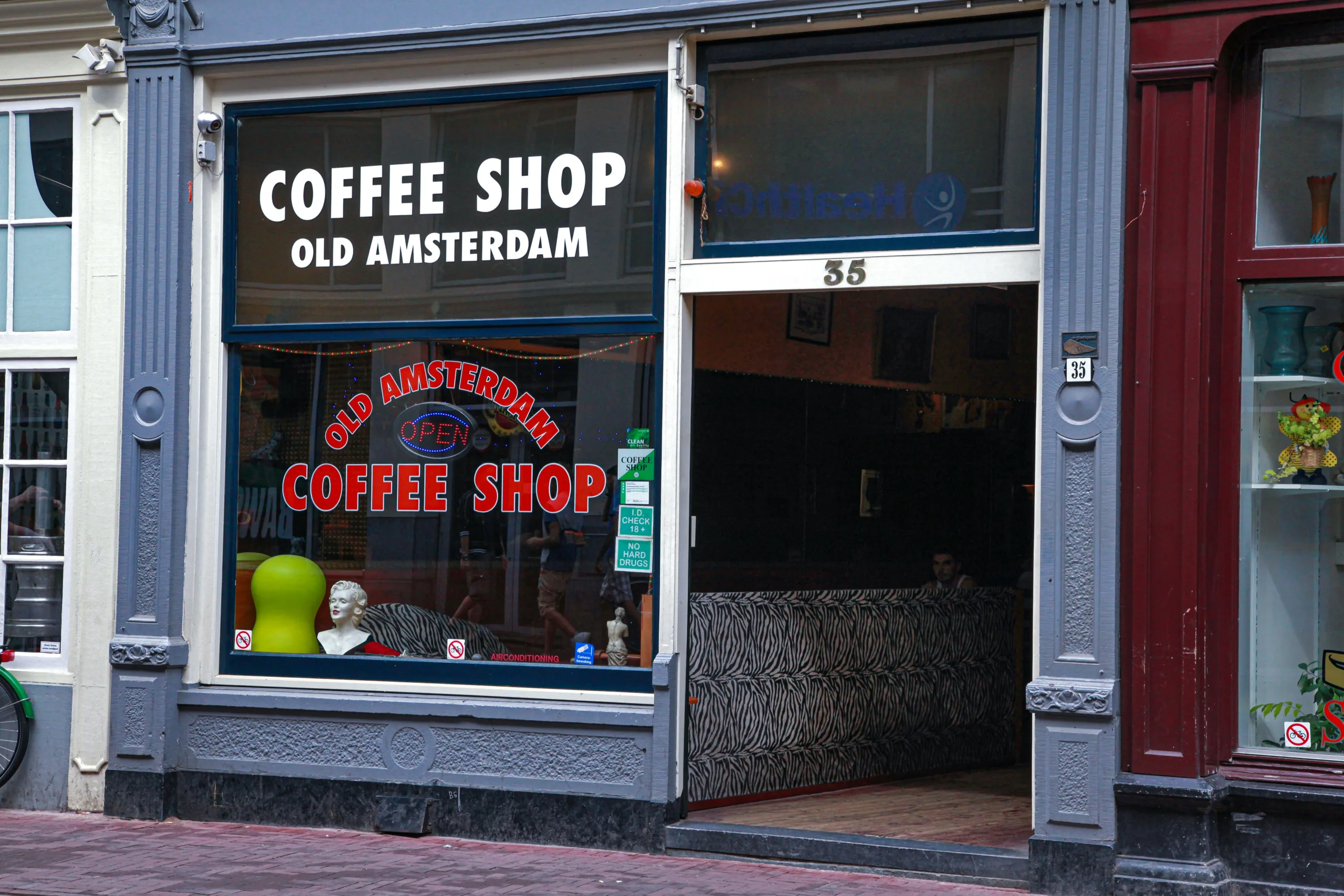
CDA MP Tijs van den Brink told the committee that the share of coffeeshops in participating municipalities selling edibles had risen from around ‘20% to 90%’, though the first interim evaluation itself puts the rise at 34% to 94%. There is no maximum THC level set for edible products in the pilot.
“That is not denormalisation of drugs, that is normalisation,” Van den Brink told the committee.
No member of the committee raised the well-established harm-reduction point that ingested cannabis products avoid the combustion by-products produced by smoked flower.
The CDA opposes the pilot but accepted in the coalition agreement that it should be completed. Mirjam Bikker (ChristenUnie) and Diederik van Dijk (SGP) called for the pilot to be ended entirely. Sneller argued that the first interim evaluation showed the closed supply chain was functioning as intended.
Sneller pressed Minister of Justice and Security David van Weel on how much money the back-door supply of non-participating coffeeshops still delivers to organised crime. Van Weel said he could not provide a breakdown, pointing only to a Statistics Netherlands estimate of €1.4bn in added value for the Dutch cannabis market, which he said should be weighed in the final evaluation.
Health minister rules out an outright ban
Hermans said she would not back a ban on edibles without scientific evidence of additional harm, noting that the pilot has deliberately permitted the same product range as tolerated coffeeshops to keep the experiment and control groups comparable.
The Trimbos Institute, the Dutch national expertise centre on drugs, is studying products with very high THC content, with results due in the first half of 2027 and a dedicated cabinet letter on edibles in the second quarter.
From early 2027, the pilot’s product regulations will be amended so that packaging shows average THC percentages alongside existing information. Bikker also pressed the minister on THC vapes, sold in participating coffeeshops as rosin vapes, and raised the possibility of banning sweet flavours.
The rosin vapes approved for the Dutch pilot are already tightly regulated, allowing no artificial flavouring, no added terpenes, no solvent-based extracts such as BHO or distillate, and only mechanically produced rosin.
Like edibles, rosin vapes deliver cannabis without combustion. Hermans said the cabinet was still considering whether sweet flavours should be restricted within the pilot.
Tobacco industry’s foothold under review
MPs from the CDA, ChristenUnie and SGP questioned the tobacco industry’s foothold in the regulated supply chain. Altria, the parent of Philip Morris USA, holds a 41% stake in Canadian cannabis company Cronos Group, which in turn controls CanAdelaar, one of the licensed Dutch growers.
Hermans said current Dutch law provides no basis to revoke a cultivation licence on the grounds of a company’s shareholders. Growers must report ownership changes and undergo periodic Bibob integrity screenings, the Dutch government’s standard probity check for licence-holders, designed to prevent organised crime from infiltrating regulated industries.
Asked her personal view, Hermans said: “Would I have wanted it? No, preferably not.”
She added that the research programme led by the WODC, the research arm of the Dutch Justice Ministry, remained independent of shareholder influence.
At Bikker’s request, the cabinet will explore whether the tobacco industry can be excluded from regulated Dutch cannabis cultivation, targeting the first quarter of 2027.
Odour complaints around CanAdelaar
Van den Brink and Van Dijk also raised odour complaints from residents living near CanAdelaar’s greenhouses in Hellevoetsluis and Hollandse Hoogtes’ facility in Bemmel.
A letter from the municipality of Voorne aan Zee dated November 03, 2026 reported 3,100 complaints about CanAdelaar. Hermans noted that enforcement of environmental rules sits with the municipality, which has already issued CanAdelaar a conditional penalty order currently under appeal.
Hermans initially declined to meet affected residents, saying she had no direct remit over enforcement, but agreed under parliamentary pressure to a listening visit.
What happens next
Bikker tabled a two-minute debate motion on the tobacco industry’s role and on youth cannabis use. The pilot’s Supervision and Evaluation Committee is scheduled to report in summer 2028, on which basis the cabinet will decide the pilot’s long-term future, as agreed in the coalition agreement.
Given the make-up of Tuesday’s committee and the absence of most of the parliamentary left, substantive policy action on edibles before the 2028 evaluation looks unlikely. The evaluation will feature as a central theme at the PCN Cannabis Congress on November 27, 2026.