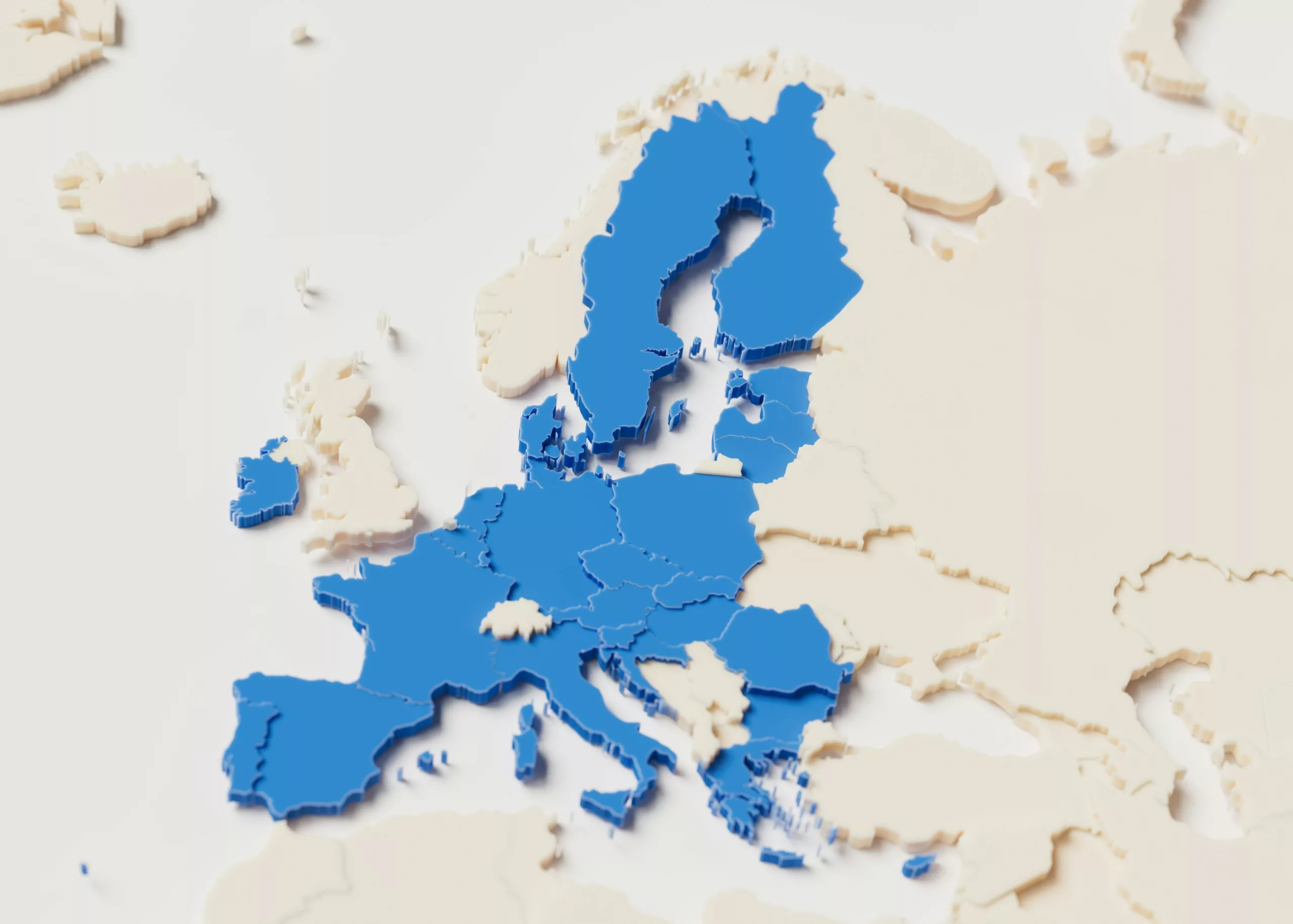



At the end of the month (March 30, 2026), shareholders of one of the fastest growing Canadian licenced producers, Organigram Global, will convene to decide the fate of its proposed €250m acquisition of Sanity Group.
The deal, announced in February, marks the largest bet on Europe’s largest medical cannabis market by a North American operator to date, and signals a bullish outlook on the European opportunity more widely.
While perhaps the most significant, certainly from the European perspective, it is by no means the only major M&A deal to have been announced over the last few months.
Just this week, German pharmaceutical cannabis company Canify AG and African medical cannabis cultivator MG Health Limited announced plans to merge. Canify’s announcement came just days after Tilray announced its $40m acquisition of craft beer giant Brewdog.
These examples are just the tip of the iceberg. Since September 2025, over a dozen further significant M&A deals have been announced across the globe.

Cannabis M&A Tracker
A continuously updated dataset tracking mergers, acquisitions and major deals shaping the global cannabis industry since 2020.
- September 19, 2025 – InterCure / ISHI (Botanico Ltd.) Financials undisclosed
- September 2025 – High Tide / Remexian Pharma €27.2m for 51% stake (implying ~€53m full equity value) Your own reporting
- October 14, 2025 – Vireo / Schwazze convertible notes $62m for notes with ~$91m face value (30% discount to par); Vireo to acquire majority of Schwazze’s 63 dispensaries and 10 manufacturing facilities in Colorado and New Mexico
- December 9, 2025 – Cronos / CanAdelaar US$67m upfront plus EBITDA-based earnout
- December 15, 2025 – Canopy Growth / MTL Cannabis C$179m enterprise value
- December 22, 2025 – Vireo / Eaze $47m in base consideration, all-stock (84m subordinate voting shares at $0.56 per share)
- December 16, 2025 – Vireo / PharmaCann Colorado assets $49m all-stock plus assumption of certain liabilities
- December 30, 2025 – TerrAscend / Union Chill $13m total commitment
- January 5, 2026 – Wyld / Grön Financials undisclosed
- January 06, 2026 – Nabis / Humble Cannabis Solutions ~$33m
- January 14, 2026 – Little Green Pharma / Cannatrek reverse takeover (all stock transaction)
- February 05, 2026 – Millstreet Credit Fund / Cannabist Virginia assets $130m loan-to-own
- February 18, 2026 – Organigram / Sanity Group up to €250m (€113.4m upfront, earnout of up to €113.8m)
- March 3, 2026 – Verdant Capital Partners / Native Roots 17 Colorado stores, financials undisclosed
- March 2, 2026 – Tilray / BrewDog £33m for BrewDog’s global brand and IP, UK brewing operations, and 11 brewpubs across the UK and Ireland.
- March 12, 2026 – Canify AG / MG Health Financials undisclosed
With this in mind, it seems hard to argue that the long-touted ‘tidal wave’ of cannabis M&A deals is not now upon us.
But, as Mitchell Osak, strategist, consultant, and author of the Cannabis Management Review, argues, with thousands of companies operating across a fragmented global cannabis industry, ‘inevitably some M&A is happening’.
In his view, for this to represent a genuine wave, ‘lots of big, strategic deals that meaningfully influence sector revenue, market structures and the participant business performance’, must take place.
Writing in a lengthy analysis circulated privately earlier this year, seen by Business of Cannabis, Osak argues that the industry is not yet financially or structurally healthy enough for that bar to be met. Balance sheets are too stretched, Schedule III too widely misunderstood, and the macro environment too precarious for anything resembling a tidal wave in 2026.
Yet not everyone agrees with that assessment. Veteran cannabis investor Seth Yakatan argues that the industry may already be in the early stages of a consolidation cycle. The mistake, he suggests, is expecting the next wave of cannabis M&A to resemble the headline-driven mergers that have defined other industries.
Click through to page 2 to read Mitchell Osak’s arguments in detail.
Mitchell Osak: Why A Cannabis M&A ‘Tsunami’ Is Unlikely, For Now
Osak’s case rests on three broad arguments.
- First, the cannabis industry remains financially fragile.
- Second, the expected catalysts for dealmaking are widely misunderstood.
- And finally, broader market conditions could further suppress large-scale consolidation.
This recent deal activity, he contends, represents isolated transactions rather than the early stages of a structural consolidation cycle.
“A small number of company-specific deals in the past three or four months do not make a trend nor do they meaningfully impact industry dynamics or revenues,” he writes. “M&A is still rare in cannabis.”
Many of the recent transactions cited as evidence of a coming wave, he argues, are better understood as distressed asset sales rather than strategic expansion.
He points to the example of cannabis delivery platform Eaze. Once valued at around $700m, the company was ultimately acquired by Vireo in an all-stock transaction worth around $47m.
“Fire sale M&A will continue,” he writes, “but I’m not sure these transactions are signs of industry confidence, ambition and health, rather the opposite.”
This distinction between opportunistic acquisitions and structural consolidation is central to his argument. While the industry will inevitably see ongoing deal activity, most transactions in the near term will resemble small single cases, rather than transformative mergers capable of reshaping the market.
Schedule III Is Not A Silver Bullet
A second pillar of Osak’s argument focuses on federal cannabis rescheduling in the United States, widely expected to move cannabis to Schedule III of the Controlled Substances Act.
Many industry observers view this shift as a major catalyst for dealmaking. Osak disagrees.
“First off, S3 is not SAFER,” he writes, referring to proposed federal banking reform legislation. “Rescheduling has no mechanisms to facilitate the entry of M&A to enable equity capital or boost the availability of traditional credit.”
While removing the punitive tax burden imposed by Section 280E could improve cash flow for some operators, he argues the impact will vary significantly across the industry. Only a small subset of companies with strong operating profits are likely to see immediate financial benefits.
Another cohort of operators, he notes, may find that any tax savings are offset by existing liabilities. A large proportion of companies, meanwhile, remain unprofitable and therefore unlikely to use tax relief to fund acquisitions.
“A bad business will remain a bad business.”
Even for stronger operators, Osak suggests the newly available cash may be deployed elsewhere. Companies could use the funds to lower prices in order to protect market share, improve compensation, or return capital to shareholders rather than pursue acquisitions.
More fundamentally, rescheduling does little to address the structural barriers that make cannabis M&A unusually complex. Regulatory fragmentation between states, licensing restrictions, and overlapping jurisdictions continue to complicate cross-market transactions.
“Rescheduling does not fix license overlaps across states or resolve federal versus state regulatory friction.”
In fact, he suggests the new regulatory framework could introduce additional complexity, particularly if federal oversight expands to include agencies such as the Food and Drug Administration.
READ MORE…


Outsiders Are Unlikely To Move Quickly
Another widely cited catalyst for consolidation is the potential entry of large strategic investors from adjacent sectors such as pharmaceuticals, tobacco, alcohol and consumer packaged goods.
Large multinational corporations, he notes, tend to operate on long planning cycles and rarely pivot rapidly into new industries. More importantly, the size and structure of the cannabis sector make it difficult for them to deploy capital at scale.
“Those with enterprise value measured in the tens if not hundreds of billions of dollars will not waste their time on companies with less than $50m in revenue,” he writes.
Given that the vast majority of cannabis businesses fall below that threshold, the pool of attractive acquisition targets is limited.
Regulatory uncertainty further complicates matters. Without federal legislation enabling interstate commerce or access to major US stock exchanges, many institutional investors and strategic acquirers remain cautious.
As such, Osak notes, meaningful participation from large corporate buyers is unlikely before broader regulatory reforms such as the SAFER Banking Act or full federal legalisation.
Weak Balance Sheets And Capital Constraints
Beyond regulatory issues, Osak argues that the industry’s underlying financial condition is simply not conducive to large-scale dealmaking.
Most publicly listed cannabis companies continue to carry significant debt and face high borrowing costs. Access to equity capital remains limited following the sector’s prolonged market downturn.
“Low share prices and a lack of cash are a major M&A headwind,” he writes.
Indeed, data from Viridian Capital Advisors shows cash now represents less than 2% of consideration in cannabis M&A transactions, highlighting how scarce traditional deal financing has become.
Stock-based acquisitions present their own challenges. With valuations still depressed and shares highly volatile, many founders and target companies are reluctant to accept equity as payment, leaving potential acquirers with few attractive financing options.

At the same time, the industry’s broader financial performance remains under scrutiny. According to research from Veridian Capital, the return on invested capital for major multi-state operators has frequently fallen below their weighted average cost of capital, implying that shareholder value is being destroyed rather than created.
“Cannabis needs to become more capital efficient to both earn solid returns on invested capital and internally fund growth,” Veridian states.
Until that dynamic changes, he suggests, boards and investors are unlikely to embrace aggressive acquisition strategies.
A Sector Still In Rationalisation
Osak concludes that the cannabis industry is still in a rationalisation phase rather than a consolidation phase.
Overcapacity, falling prices and regulatory complexity are forcing weaker operators out of the market, while stronger companies retrench and focus on operational efficiency.
In his view, this painful process is a necessary step in the maturation of the industry, but it is not typically a period associated with large-scale merger activity.
“Industry maturation is driving consolidation as markets shed excess capacity and cull weak operators,” he explains. “Yet this stage of industry development is typically not a period of robust M&A unless we are talking distressed assets or unique one-off transactions.”
For now, he argues, cannabis dealmaking will likely remain selective, opportunistic and relatively small in scale.
Yakatan, however, sees many of these same dynamics differently. Where Osak sees financial fragility and structural barriers to consolidation, Yakatan argues the industry is experiencing the necessary shakeout that typically precedes major M&A cycles. Read on page 3
Seth Yakatan: The M&A Wave Might Already be Here, We’re Just Looking in the Wrong Places
While Osak argues the cannabis industry is not yet financially or structurally prepared for a consolidation wave, veteran investor Seth Yakatan reaches the opposite conclusion. He suggests that observers may simply be looking for the wrong signals.
“The next phase of cannabis M&A consolidation will be quieter, private-led, and far more consequential than a headline ‘tsunami’,” he writes.
In his view, the industry is not waiting for a future consolidation cycle; this has already begun.
Consolidation Follows Industry Pain
Yakatan begins by reframing the cannabis industry’s financial distress. Where Osak sees weak balance sheets, capital scarcity and collapsing valuations as barriers to consolidation, Yakatan sees them as the necessary conditions for it to take place.
“Every real M&A wave begins with wreckage,” he argues.
Looking back at other industries, he says that large consolidation cycles rarely occur during periods of strong growth or investor optimism. Instead, they tend to follow years of financial pressure and industry shakeouts.
In the airline industry, a series of major mergers between 2008 and 2013, including Delta’s $2.6bn acquisition of Northwest and the $3.17bn United–Continental merger, came after years of bankruptcies and margin compression. Similar patterns emerged in banking after the global financial crisis and in beer following years of declining growth and regional roll-ups.
Consolidation, he argues, tends to arrive only after weaker competitors have already been forced out, and cannabis has now reached that point.
Since early 2021, the sector has experienced what he describes as a wholesale reset. Equity valuations across the industry have collapsed by roughly 90%, capital markets have largely closed, and numerous operators have exited the market through forced asset sales, restructurings or quiet shutdowns.
“This wasn’t a failure of cannabis. It was the inevitable clearing of a speculative excess layered onto a heavily regulated and immature market.”
What now remains is a smaller group of more disciplined operators capable of pursuing strategic expansion.
Schedule III As A ‘Permission Slip’
Like Osak, Yakatan acknowledges that the upcoming rescheduling of cannabis to Schedule III will not solve the industry’s structural problems, but will improve conditions elsewhere.
“Schedule III is not SAFER Banking,” he writes. “It does not solve custody, uplisting, or interstate commerce.”
However, he argues that rescheduling fundamentally changes the financial mechanics underpinning the industry by removing the distortions created by Section 280E.
Before rescheduling, cannabis companies faced unusually high tax burdens that made cash flow modelling unreliable and made acquisition financing difficult to structure.
By restoring more conventional financial metrics, including credible EBITDA calculations, rescheduling allows lenders and investors to underwrite deals with greater confidence.
“Capital doesn’t require certainty; it requires defensible assumptions.”In that sense, Schedule III may not unleash a flood of capital overnight. But it provides what Yakatan describes as a ‘permission slip’ for disciplined buyers to begin executing deals that were previously difficult to model.
READ MORE…


Quantity Over Quality
Many industry observers, Yakatan argues, are waiting for large headline deals, such as mergers between major multi-state operators or acquisitions by Fortune 500 companies.
But, he suggests that ‘the first phase of every durable M&A cycle is boring by design’.
Instead of large, transformative deals, early-stage consolidation typically consists of smaller transactions, including regional combinations, asset carve-outs, vertical integrations and restructuring-led acquisitions.
Although these transactions rarely generate headlines, they steadily concentrate ownership of the strongest assets, and by the time the market widely recognises a consolidation wave, much of the most attractive deal activity has already occurred.
“The real signal will be deal density, not deal size.”
Private Operators Will Drive The First Phase
On this thread, he argues that early consolidation is unlikely to be driven by publicly listed cannabis companies.
Public multi-state operators face several structural constraints, including depressed share prices, shareholder resistance to dilution, refinancing obligations and complex regulatory footprints across multiple states.
Privately owned companies, on the other hand, ‘operate under a different rulebook’.
A large cohort of privately held cannabis companies now generate meaningful revenue and EBITDA while maintaining relatively clean balance sheets and founder-led ownership structures.
This group, he argues, is well positioned to pursue acquisitions using flexible deal structures such as earn-outs, equity rollovers and seller financing.
As a result, Yakatan believes much of the early consolidation activity will occur through private-to-private combinations and sponsor-backed platform strategies, rather than through public market transactions.
Credit Led Acquisitions And Creative Deal Structures
Rather than relying on large cash acquisitions, many buyers are using alternative structures, including credit purchases, convertible notes and equity-based deals.
He points to the recent activity of US multi-state operator Vireo, which over the last year has made a series of acquisitions using a combination of stock-based transactions, distressed debt purchases and structured earn-outs.
In one example, the company acquired senior secured convertible notes issued by Schwazze with a face value of $91m for approximately $62m, effectively gaining control of the company at a significant discount.
Yakatan describes this approach as ‘credit-as-control’, a strategy that allows buyers to acquire assets without relying on traditional M&A financing.
Similarly structured transactions have included the acquisition of retail assets from PharmaCann and the purchase of cannabis delivery platform Eaze in an all-stock deal.
For Yakatan, these deals illustrate how consolidation can progress even in a capital-constrained environment.
“The early wave of the cannabis tsunami will be driven by structures, not by sentiment,” he writes.
A Different Kind Of M&A Wave
Taken together, Yakatan’s argument suggests that the cannabis industry may already be experiencing the early stages of consolidation, even if it does not yet resemble the dramatic M&A cycles seen in other industries.
Rather than large mergers between major operators, the first phase of the wave may consist of quieter, incremental transactions driven by private capital, structured financing and regional expansion.
“The tsunami is already occurring. You are just waiting for the shoaling to call it.”