

Last updated: October 13, 2026
Why are cannabis listings so relevant in 2026?
On April 22, 2026, US Acting Attorney General Todd Blanche signed an order moving cannabis under a state medical licence and any FDA-approved cannabis drugs to Schedule III, formally recognising its medical value and unlocking DEA registration for commercial operators for the first time.
While medical cannabis remained in Schedule I of the Controlled Substances Act (CSA), a company whose primary business is growing and selling cannabis could not accurately state that it complied with federal law and thus couldn’t meet the listing requirements for both NYSE and NASDAQ.
As such, until this change, cannabis operators have been effectively locked out of major US exchanges due to the federal illegality of cannabis. For the first time in the industry’s history, US cannabis operators had a path to list their stocks on blue-chip exchanges.
Crucially, adult-use cannabis remains under Schedule I, meaning only operators willing to bifurcate their operations, wall off their medical business, and register their medical facilities with the DEA have a route to the public markets.
The wider rescheduling process is unfinished. The DEA’s administrative hearing on the broader rule ran from June 29 to July 14. On September 29, Chief ALJ Derek Julius stayed proceedings pending briefing on a GAO report on the DEA’s scheduling procedures (GAO-26-108623, published September 23), and the DEA’s response is due October 13.
What are investors saying?
In ATB Cormark Capital Markets’ latest Cannabis Investor Sentiment Survey, conducted from September 21 to 29, respondents put the probability of broader sector uplistings to the NYSE or NASDAQ within six months at 67%.
That is the first time uplistings have crossed 50% in the survey’s seven editions. The figure was 23% in spring and 16% a year ago. ATB puts the jump down to the Trulieve and Glass House listings, which gave investors confidence that rescheduling could unlock wider exchange access.
Listings also matter because investors say they would change what they do with their money. Asked what would make them put more capital into US operators, 81.3% named full rescheduling and 37.5% named uplistings to the NYSE or NASDAQ, the second most-cited factor.
The survey closed the day before the Chief Administrative Law Judge stayed the rescheduling process, so ATB concedes its numbers are probably now too high. It has pushed its base case for full rescheduling to the first quarter of 2027, and it expects a wave of uplistings after rescheduling rather than before.
Respondents assigned a 65% probability to full rescheduling to Schedule III within six months, while 70.6% expected rescheduling to be done ahead of the US midterm elections. Only 29.4% had raised their exposure to US operators in the past six months, and 64.7% had made no change.
Who has listed since rescheduling?
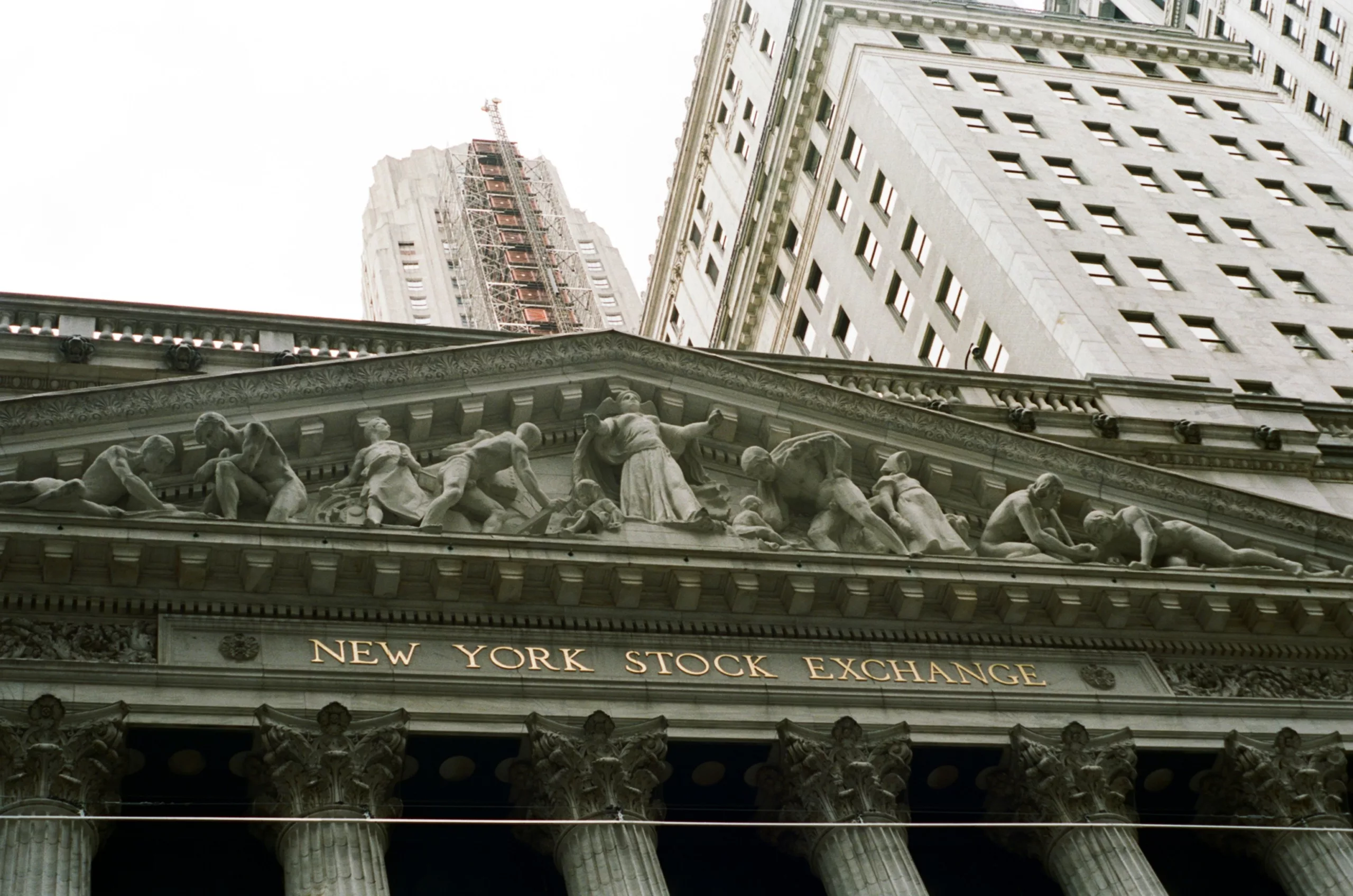
Trulieve Cannabis Corp (TRLV) became the first US ‘plant touching’ cannabis company to list on the New York Stock Exchange on June 10, 2026, after separating out its medical arm. It opened at $11.50 and had slipped to $10.75 at the time of publication.
Glass House Brands (GLAS) followed weeks later, after executing a near-identical separation of its medical and recreational arms. The California cultivator said on June 25 that its subordinate voting shares were approved for the NYSE under GLAS, and trading began on June 30, when the stock reached a high of $13.25. It closed at $4.26 on October 09, about 68% below that high.
Which cannabis companies are currently listed on NASDAQ and NYSE?
At least 12 cannabis operators and producers trade on the NYSE or NASDAQ as of October 2026. Trulieve and Glass House Brands are on the NYSE, and ten more are on NASDAQ, led by Tilray, Cronos and Canopy Growth. Ancillary firms, lenders and cannabinoid drug developers also list there.
The NYSE has only been open to US cannabis operators since June. Meanwhile the NASDAQ is already home to a broad selection of companies who were able to list thanks to being based outside of the US and therefore not ‘touching’ US cannabis.
Operators and producers
| Company | Ticker | Exchange | Note |
| Trulieve | TRLV | NYSE | First US cannabis company to list on the NYSE, June 10, 2026 |
| Glass House Brands | GLAS | NYSE | Trading from June 30, 2026 |
| Cronos Group | CRON | NASDAQ | |
| Tilray Brands | TLRY | NASDAQ | |
| Canopy Growth | CGC | NASDAQ | |
| Aurora Cannabis | ACB | NASDAQ | Formerly on the NYSE |
| SNDL | SNDL | NASDAQ | |
| Organigram | OGI | NASDAQ | |
| Village Farms International | VFF | NASDAQ | |
| High Tide | HITI | NASDAQ | |
| Akanda | AKAN | NASDAQ | Micro-cap |
| IM Cannabis | IMCC | NASDAQ | Micro-cap |
Ancillary, retail and technology
| Company | Ticker | Exchange |
| GrowGeneration | GRWG | NASDAQ |
| Hydrofarm | HYFM | NASDAQ |
| Agrify | AGFY | NASDAQ |
| Forian | FORA | NASDAQ |
| WM Technology (Weedmaps) | MAPS | NASDAQ |
| Scotts Miracle-Gro | SMG | NASDAQ |
| Turning Point Brands | TPB | NASDAQ |
Cannabinoid pharma and biotech
| Company | Ticker | Exchange |
| Jazz Pharmaceuticals | JAZZ | NASDAQ |
| 22nd Century Group | XXII | NASDAQ |
Which cannabis companies are next to uplist?
Curaleaf announced on May 26 that a 1-for-3 reverse split would prepare it to uplist if regulatory developments allow, taking its subordinate voting shares from 698,728,008 to about 232.9 million. The split took effect on June 05. Its shares currently trade on the TSX (CURA) and OTCQX (CURLF).
TerrAscend held a special meeting on August 24, where shareholders approved a share consolidation, with 99.25% of votes cast in favour. The board can set a ratio of between 1-for-5 and 1-for-20, and has until August 24, 2027 to do so. Executive Chairman Jason Wild said in June: “We believe uplisting to a major US exchange is no longer a question of if, it is a question of when.” The company has said it has been consulting the US exchanges. It has named neither an exchange nor a date.
Ascend Wellness held its vote on August 28, where stockholders approved a reverse split by 112,305,378 votes to 1,391,090. The board can set a ratio of between 1-for-10 and 1-for-50, and it must take effect before any national exchange listing or within a year of the meeting, whichever comes first. Ascend’s proxy statement says it intends to apply to list on the NYSE American or NASDAQ.
Verano Holdings. Verano completed a 1-for-5 share consolidation on June 11, 2026, after announcing it on June 01. It trades on CBOE Canada and OTCQX under VRNO. The company redomiciled from British Columbia to Nevada in November 2025. It has not yet named a US exchange or filed a listing application.
Vireo Growth. Vireo completed a 30-for-1 share consolidation on June 05, 2026. It trades on the CSE (VREO) and OTCQX (VREOF). The company has not yet publicly said it plans to list in the US, although CB1 Capital’s Todd Harrison has named it among the operators best placed to follow Trulieve and Glass House.
Jushi Holdings. Shareholders approved Jushi’s move from British Columbia to Nevada on June 24, and it completed on July 30, 2026. Jushi trades on the CSE (JUSH) and OTCQX. It has made no statement about a US exchange listing.
Cresco Labs. Cresco said in June that it was ‘actively preparing for a potential uplisting’. Its Management Information Circular, published September 25, sets an October 30 shareholder meeting. It refers to a ‘potential listing on a senior US exchange’ and describes a new holding company redomiciled to Delaware. No exchange is named.
Veri Medtech. Veri Medtech (VRHI) has set terms for a $15 million offering of 3.75 million shares at $4.00 and says it intends to uplist from OTCID to NASDAQ.
Why do cannabis companies need to reverse split?
Cannabis companies use reverse splits to meet US exchange price rules, both to get listed and to stay listed. The main boards ask for a $4 share price to list, while Nasdaq requires a $1 bid and the NYSE a $1 average close to stay listed. Consolidating shares lifts the price without changing the company’s value.
To list
The NYSE’s Initial listing standards require a $4.00 share price in each category. Under its market capitalisation test, the closing price must be $4.00 or more for at least 90 consecutive trading days. NYSE American, the smaller board, moved to a flat $4 requirement in rule changes the SEC approved on March 27, 2026.
SImilarly, the NASDAQ’s Global Market rules require a minimum bid price of at least $4 per share.
Most multistate operators trade well below that on the OTC markets, so they consolidate first. Curaleaf went 1-for-3 and Verano 1-for-5. Ascend Wellness has approval for any ratio from 1-for-10 to 1-for-50, and TerrAscend from 1-for-5 to 1-for-20.
To stay listed
NASDAQ’s continued listing rules require a minimum bid price of $1 per share. A stock that closes below $1 for 30 consecutive business days draws a deficiency notice and, generally, 180 days to close at $1 or more for 10 consecutive business days. Capital Market companies can sometimes get a second 180-day period.
IM Cannabis, for example, announced on April 10, 2026 that it had received a bid price deficiency notice and had until October 06, 2026 to cure it. A reverse split is the usual fix. The NYSE has a similar rule. An average closing price below $1.00 over 30 trading days puts a company out of compliance, with six months to rectify.
The rules are tighter for repeat consolidators. NADSAQ gives no compliance period to a company that carried out a reverse split in the prior year, or splits totalling 250-to-1 or more in two years, and can move straight to delisting. The same applies if the stock closes at $0.10 or less for 10 consecutive business days.
The companies also say a higher price widens their investor base. TerrAscend’s proxy says some institutional investors have internal policies that prohibit or discourage them from buying shares below a certain price. Ascend says the split could improve visibility with analysts and broker-dealers and support institutional participation. Both are the companies’ own claims, and both say a higher price may not hold after the split.
FAQ
Is Trulieve listed on the NYSE? Yes. Trulieve began trading on the NYSE under TRLV on June 10, 2026, the first US cannabis company to list on a major US exchange.
Has Curaleaf listed on the NYSE or NASDAQ? No. Curaleaf completed a 1-for-3 reverse split in June and says it is preparing to uplist, but it had filed no formal application as of late May and still trades on the TSX and OTCQX.
Why are cannabis companies doing reverse stock splits? To lift their share prices above the minimum US exchanges require at listing, and above levels that restrict some retail brokers and institutional investors.
Are cannabis stocks a good investment? Business of Cannabis does not give investment advice. Sector valuations are low, the five-year record is poor, and the tax and rescheduling picture is unresolved.
Is cannabis legal in the US now? No, cannabis remains federally illegal. State-licensed medical cannabis was moved to Schedule III on April 22, 2026. Adult-use remains Schedule I, and the broader DEA process remains incomplete.