

German patients challenging the recent controversial changes to medical cannabis reimbursement via statutory health insurance (GKV) are facing lengthy battles across the country’s courts.
The GKV-Beitragssatzstabilisierungsgesetz, the cost-saving law that removed dried cannabis flower from statutory reimbursement on July 30, 2026, is thought to have impacted around 65,000 patients across the country.
After the Federal Constitutional Court refused to hear challenges to these changes, the fight has been playing out in Germany’s lower courts.
Patients demanding clarity on whether existing reimbursed prescriptions will continue uninterrupted or whether they must now pay out-of-pocket are now facing a lottery, with different courts issuing different rulings.
Court Pinball
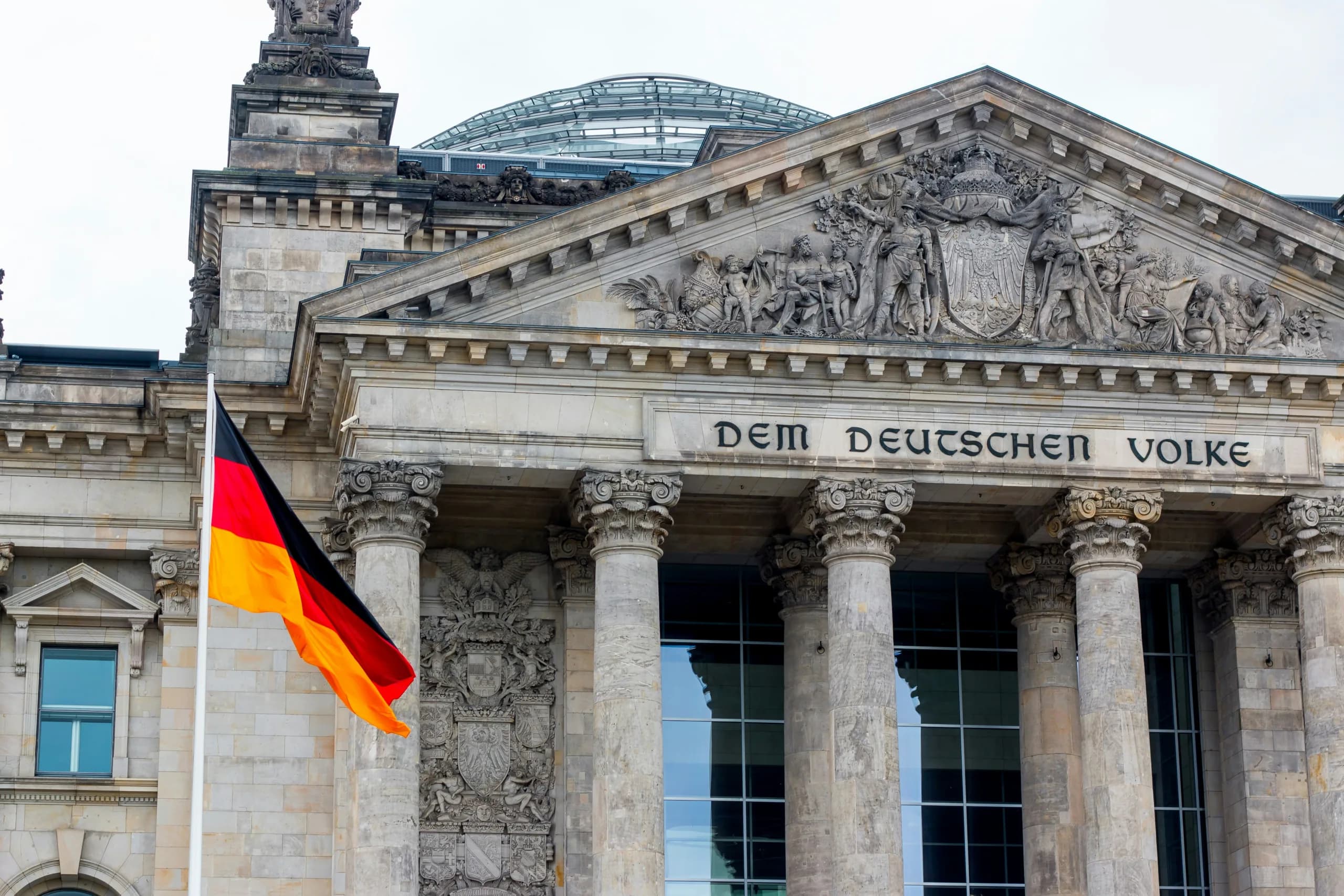
Last week, the Federal Constitutional Court in Karlsruhe declined to accept an individual patient’s Verfassungsbeschwerde, a constitutional complaint that lets citizens challenge a law directly.
The complaint, from a patient whose insurer had granted indefinite reimbursement before the amendments took effect, was ruled ‘manifestly inadmissible’ and of no fundamental constitutional significance. The judge reasoned that the patient was not directly affected in the constitutional sense, and the subsidiarity principle, which requires lower courts to be exhausted first, was not satisfied.
As such, the patient was told to first take the charges through the social courts. A separate, class-style constitutional complaint is being prepared by the Arbeitsgemeinschaft Cannabis als Medizin (ACM, the Working Group on Cannabis as Medicine) and lawyer Oliver Tolmein on behalf of a broader group of patients, but has not yet been filed.
Three Sozialgerichte, the German regional social courts that hear statutory-insurance disputes, have now ruled on the point in emergency proceedings, with two ruling against the patients.
The Frankfurt am Main Social Court (case S 14 KR 409/26 ER), ruled on August 21, 2026 that the removal of flower from §31(6) SGB V, the provision of the German social security code that governs cannabis reimbursement, ends the claim outright.
Leipzig Social Court reached the same conclusion on September 16, 2026, for a patient who had been receiving reimbursed flower since 2018 (case S 3 KR 316/26 ER). The patient’s appeal to the Saxony Higher Social Court (Landessozialgericht Sachsen) remains open.
Under this interpretation, a prior approval does not survive the new statute, and no transitional protection applies.
A third decision from the Landshut Social Court (case S 16 KR 271/26 ER) offered some temporary, but not definitive support for the patient.
The case concerned a dialysis patient who had been receiving reimbursed cannabis flower since 2018 under an indefinite approval, which was pulled three weeks after the amendment took effect. The patient challenged the withdrawal, and the court ruled that his reimbursement must continue while the challenge is heard, and can still be taken to the Bavarian Higher Social Court for an appeal.
An additional Social Court in Dresden is reported to have ruled the same way, though Business of Cannabis could not independently verify this case.
All three decisions are Eilverfahren, emergency rulings that fix a provisional position pending full proceedings. None binds another court, and all rest on the specific wording of the individual approval of the patient.
READ MORE…


The structural problem
This state-level autonomy and case-by-case dynamic is precisely why a patchwork of enforcement is likely to emerge as more challenges come to court.
The reworked §31(6) SGB V is a single piece of federal law applied uniformly across Germany, but the social courts sit regionally and decide independently.
From the patients’ perspective, there are three potential routes to securing reimbursement. A Higher Social Court ruling on appeal would bind the social courts in an individual state. A ruling from the Federal Social Court in Kassel would settle this nationally, but getting a case heard in the top federal court on social security questions can typically take three to five years from filing to a binding national ruling, and often longer.
A ruling from the Federal Constitutional Court is the fastest and most effective route in theory. Yet, as detailed above, this path has now been closed off until the lower courts have been exhausted.
The first commercial casualty
Despite representing a significant minority of the German medical cannabis market, the changes to reimbursement have already begun claiming commercial scalps.
Specialist cannabis pharmacy Lux 99 in Hürth filed for an insolvency on October 24, 2026, placing blame squarely at the feet of the GKV amendments. The pharmacy had built its model around reimbursed flower patients. The Verband Cannabis-versorgender Apotheken (VCA, the Association of Cannabis-Supplying Pharmacies) has separately warned that price pressure in the self-pay segment is compressing margins for the pharmacies now expected to absorb former statutory-insurance patients.
A pushback is already underway
The Bundestag passed the Notfallreform, the German government’s emergency-care reform package, in third reading on October 15, 2026, with twelve amendments to the GKV savings bill carried alongside it. One of those amendments materially softens the mandatory six-month finished-medicine trial for new cannabis patients, as we reported last month.
Under the new wording, the trial applies only in the indication for which a licensed cannabis-containing finished medicine actually exists, and the duration is left to the physician’s discretion.
In practice, that largely dismantles the funnel that routed new chronic-pain patients towards Vertanical’s Exilby, which launched commercially on September 1 at €745.40 per pack. The softening was endorsed by both the German national association of statutory-insurance physicians (Kassenärztliche Bundesvereinigung or KBV) and the national umbrella body for the statutory health funds (GKV-Spitzenverband) at the Health Committee hearing on October 7, closing the earlier split between the two bodies.
Deliberation in the Bundesrat, Germany’s upper chamber representing the 16 states, is expected on November 20, 2026, as an Einspruchsgesetz, a category of federal law that does not require upper-chamber consent.
What the amendment does not do is restore flower reimbursement, or address the status of the roughly 65,000 patients cut off from it on July 30. At the same October 7 hearing, the industry body for pharmaceutical cannabinoid companies, the German Cannabis Business Association, the German Cannabis Patients’ Association, the German Hemp Association, the Federal Association of the Pharmaceutical Industry and the BAG Selbsthilfe patient-advocacy umbrella all criticised the continued flower exclusion, calling for reimbursement to be restored for seriously ill patients and for the tariff that sets what pharmacies charge insurers to be used to reprice flower rather than remove it.