

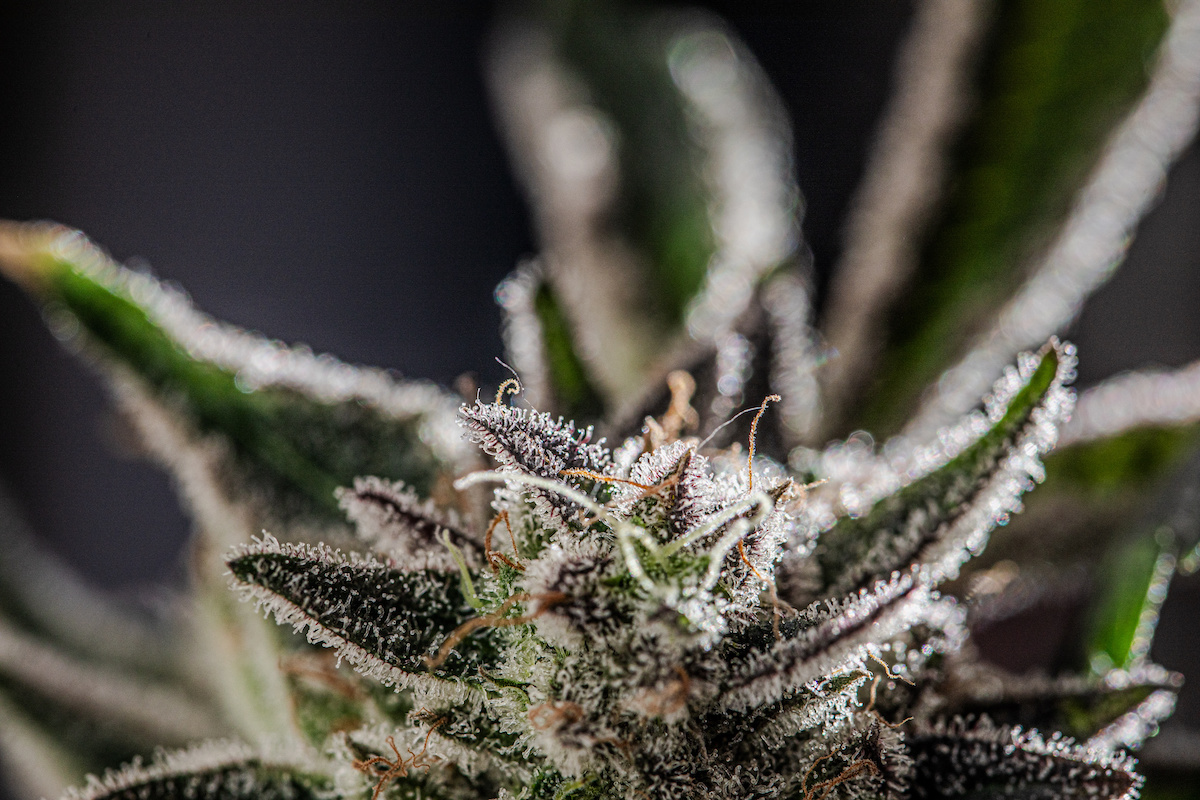
Previously, it was unknown how cannabis naturally creates high quantities of cannabinoids and terpenes. Now, new research from biologists at the University of British Colombia has defined the “high efficiency” hacks that the plant’s cells use to do this.
A number of biotechnology companies are now using yeast or cell cultures to create synthetic cannabinoids. The process allows for the mass production of cannabinoids to create a high volume of products in order to keep up with consumer demand.
In a new study, published in the journal Current Biology, plant biologists uncovered the microenvironments in which THC is produced and transported in cannabis trichomes, shedding light on several critical points in the pathway of making THC or CBD within the cell.
Read more: New research could help cultivators control THC and CBD levels in crops
University of British Columbia botanist who led the research, Dr Sam Livingston, commented” “This really helps us understand how the cells in cannabis trichomes can pump out massive quantities of tetrahydrocannabinol (THC) and terpenes—compounds that are toxic to the plant cells at high quantities – without poisoning itself.
“This new model can inform synthetic biology approaches for cannabinoid production in yeast, which is used routinely in biotechnology.
“Without these ‘tricks’ they’ll never get efficient production.”
Read more: Exploring cannabis yield optimisation with PharmaSeeds
Livingston, along with co-author Dr Lacey Samuels, used rapid freezing of cannabis glandular trichomes to immobilise the plant’s cellular structures and the metabolites in situ.
This enabled them to investigate cannabis glandular trichomes using electron microscopes that revealed cell structure at the nano level, showing that the metabolically active cells in cannabis form a “supercell” that acts as a tiny metabolic biofactory.
Until now, synthetic biology approaches have focused on optimising the enzymes responsible for making THC and CBD – like building a factory with the most efficient machinery to make as much product as possible. However, these approaches haven’t developed an efficient way to move intermediate substances from one enzyme to another, or from inside the cell to the outside of the cell where final products can be collected.
This research helps to define the subcellular “shipping routes” that cannabis uses to create an efficient pipeline from raw materials to end products without accumulating toxins or waste products.
Dr Samuels stated: “For more than 40 years, everything that we thought about cannabis cells was inaccurate because it was based on dated electron microscopy.”
“This work defines how cannabis cells make their product. It’s a paradigm shift after many years, producing a new view of cannabinoid production. This work has been challenging, partly the result of legal prohibition and also due to the fact that no protocol for the genetic transformation of cannabis has been published.”
[activecampaign form=31]
- UK Home Office grants high-THC medical cannabis licence for £300,000 research facility
- Red light receptor activation: a cause of unwanted hermaphroditism?
- How much CO2 do your cannabis plants need?
- Breast cancer breakthrough for medical cannabis company Apollon Formularies
- Cannabinoids for glioblastoma: MGC Pharma announces pre-clinical trial results