

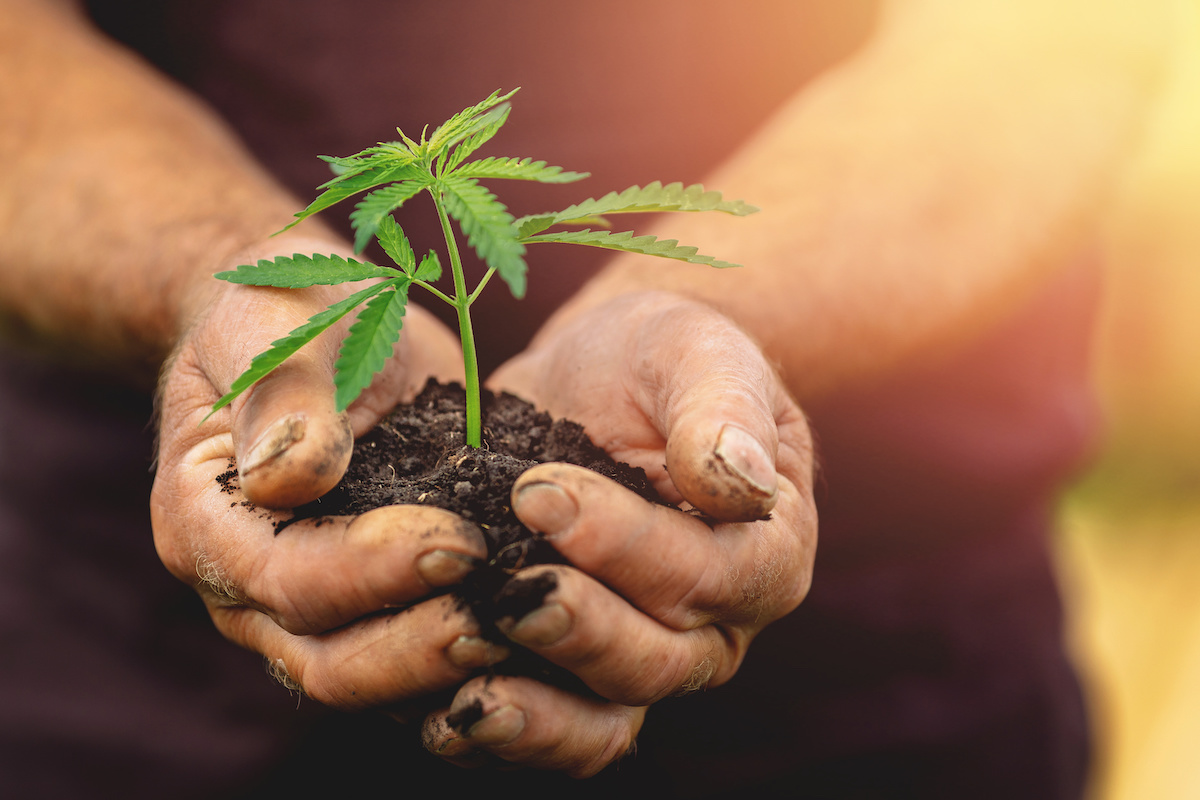
The European Industrial Hemp Association (EIHA) has announced that the Common Agricultural Policy (CAP) proposal has been adopted by the Council following the final vote at the European Parliament on November 24.
From 1976 to 1999 agricultural hemp producers in Europe were able to plant seeds with a maximum level of 0.3 per cent THC, which was then lowered to 0.2 per cent in order to prevent illicit cannabis cultivation. This reduction put Europe at a competitive disadvantage in the industry.
In October 2020, the European Parliament voted in favour of restoring the level to 0.3 per cent. The EIHA, which represents the interests of hemp farmers, producers and traders working with hemp fibres, shives, seeds, leaves and cannabinoids, announced that the final proposal for the Common Agricultural Policy (CAP) was adopted on 2 December, 2021, following discussions to agree on compromises.
The new CAP will enter into force on 1 January 2023.
Daniel Kruse, president of the EIHA, commented: “I have been fighting for this moment for over a decade. My special thanks go to our amazing team in Brussels, who have made this possible.
“This is a great day for the hemp sector and another step towards a greener future for Europe. However, if compared to other countries worldwide, 0.3 per cent is still a low limit; for instance, Switzerland, in the heart of Europe, has a higher number, and other EU countries already work with higher limits as well.
“Scientific studies and many years of experience prove that higher limits pose absolutely no safety risk for consumers. The EU lays the foundation for a growing, green and sustainable industrial hemp sector across our Union and it has the chance to achieve a level playing field again in global competition when it comes to the industrial hemp sector.”
The new policy recognises the possibility for farmers to receive Direct Payments for hemp varieties registered in the EU Catalogue that have a maximum level of THC of 0.3 per cent, a change that entails a potential enlargement of the number of hemp varieties accepted under the EU Catalogue.
However, this level only applies if farmers want to receive direct payments, meaning that in Europe it is possible to plant hemp with THC level on the field over 0.3 per cent given that it is authorised by national regulations.
Lorenza Romanese, EIHA managing director, added: “I am proud of what has been achieved today. We worked hard to ensure that hemp had the recognition it deserves in the Common Agricultural Policy. I would say that this small step reflects that EU legislators are closer to fully acknowledging and recognising the existence of a legitimate European hemp sector.
“However, as I have said other times, this is not it. We need to keep working together, as there are still other areas where hemp deserves to be better regulated, but we are on the right track.”